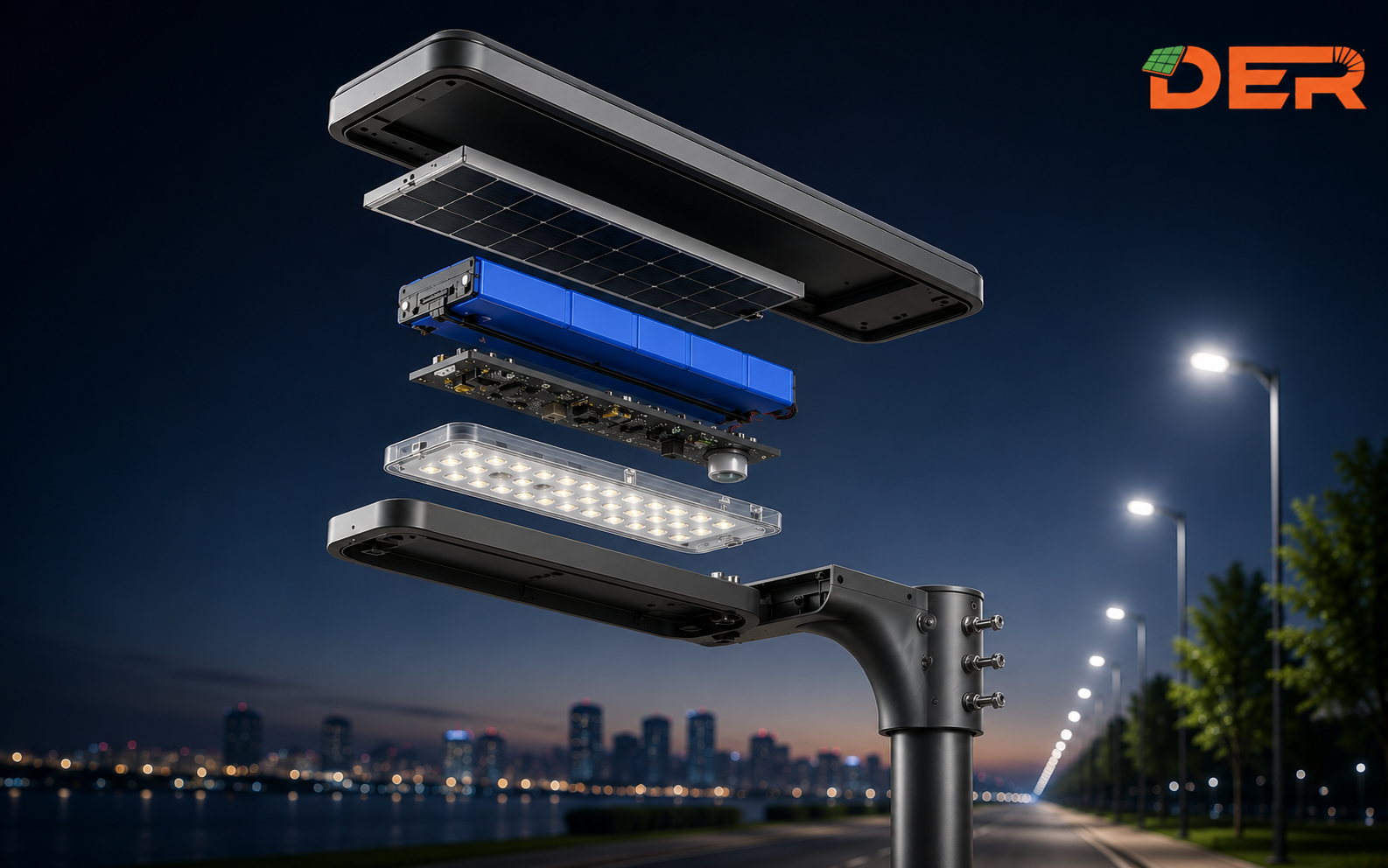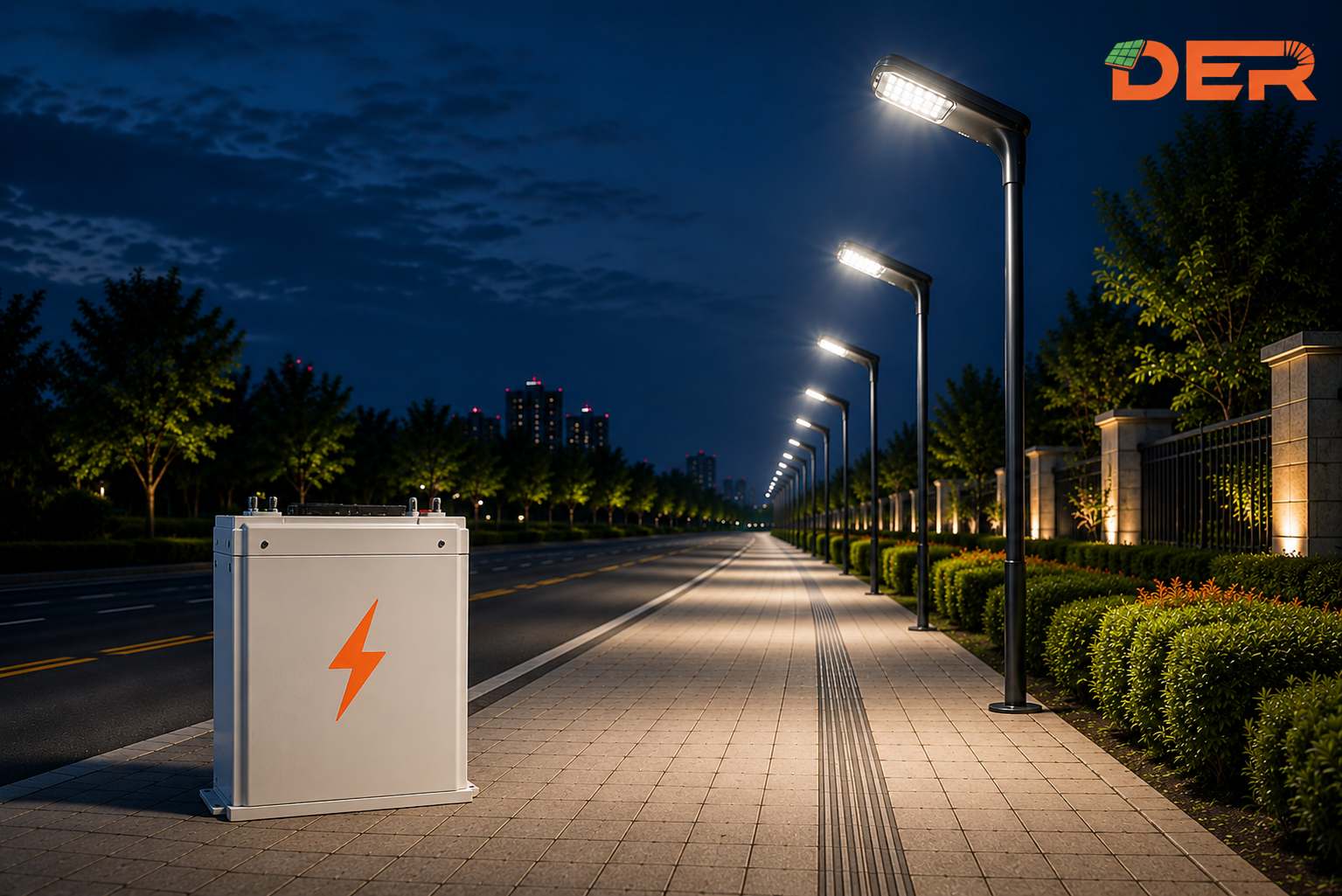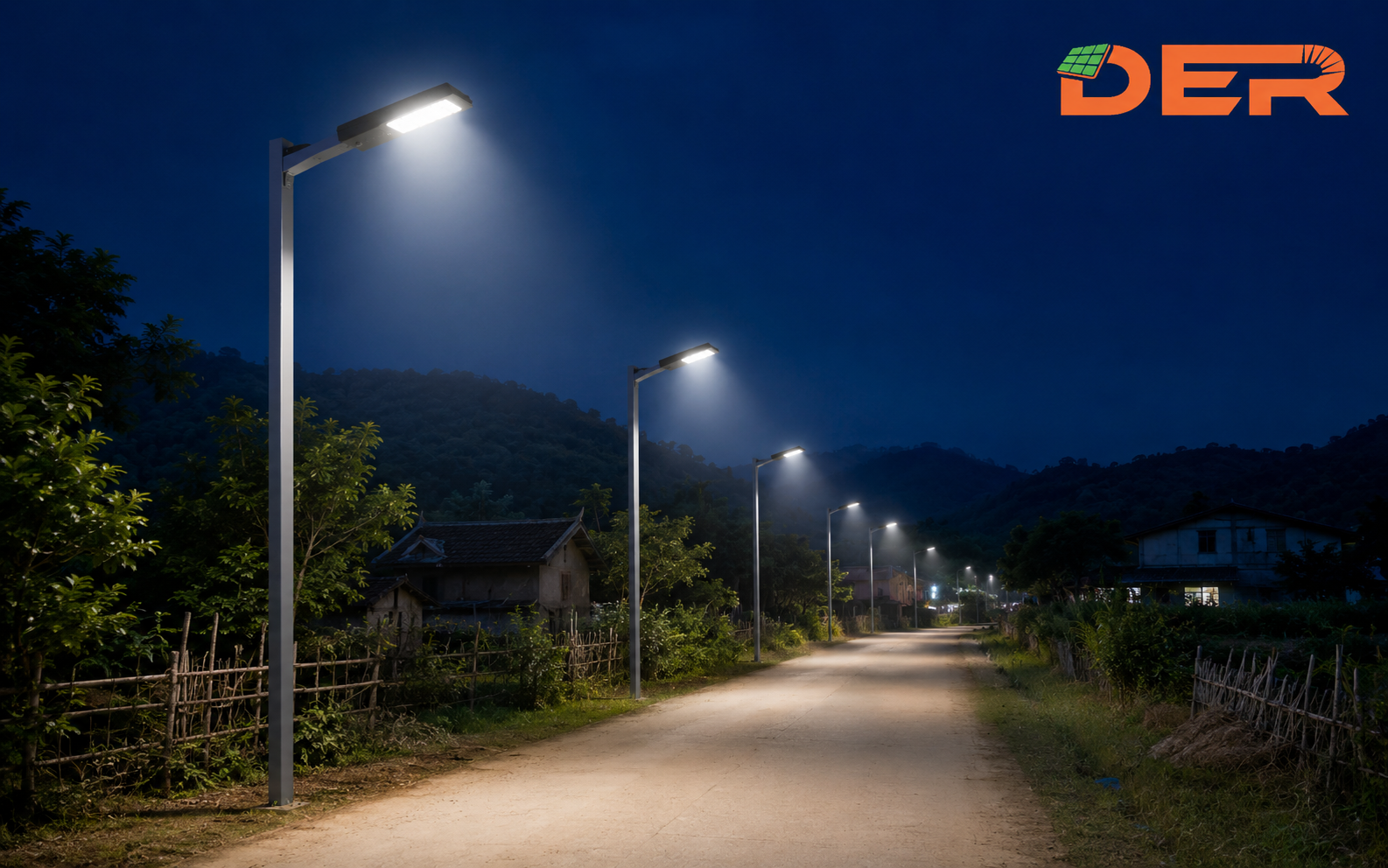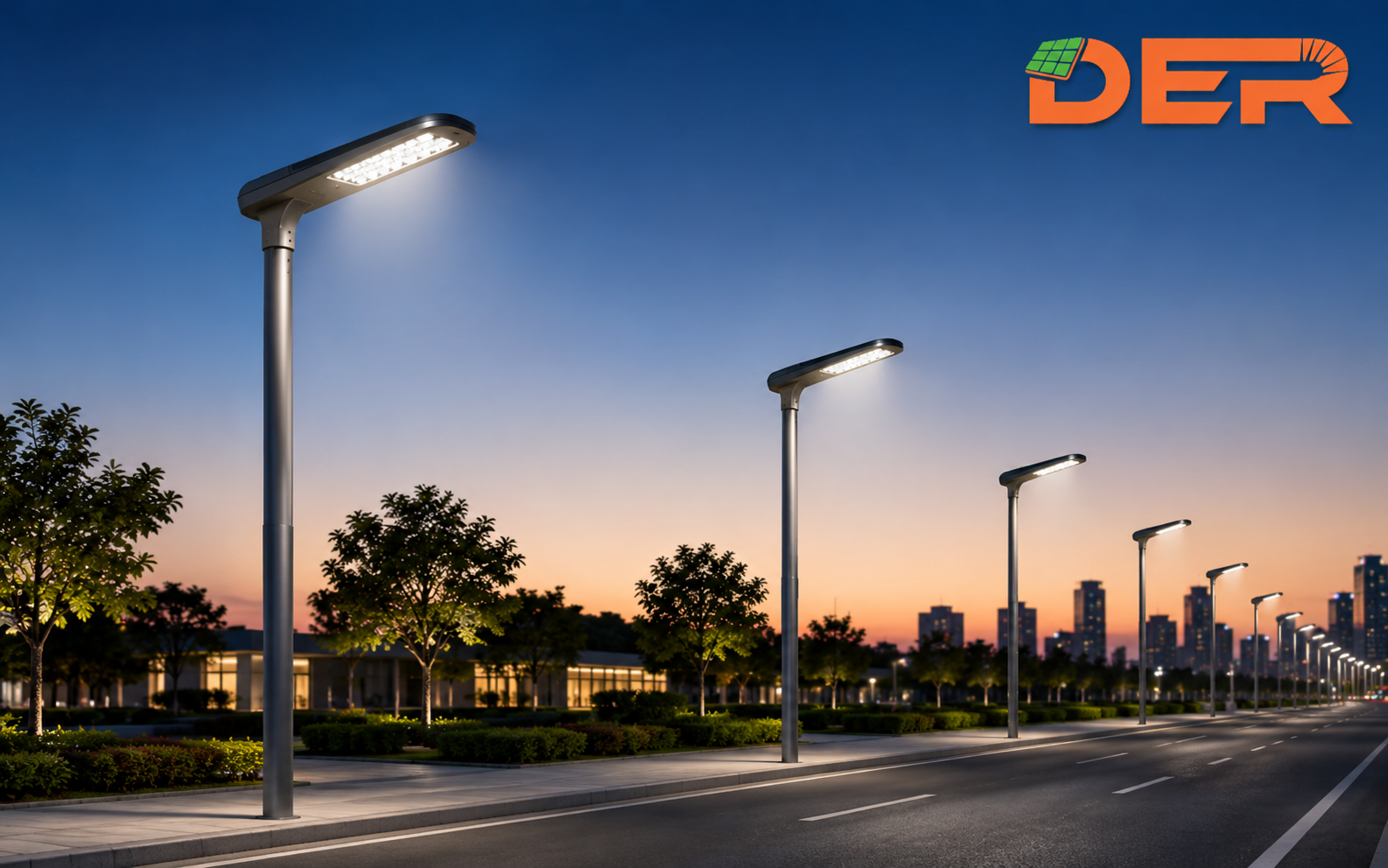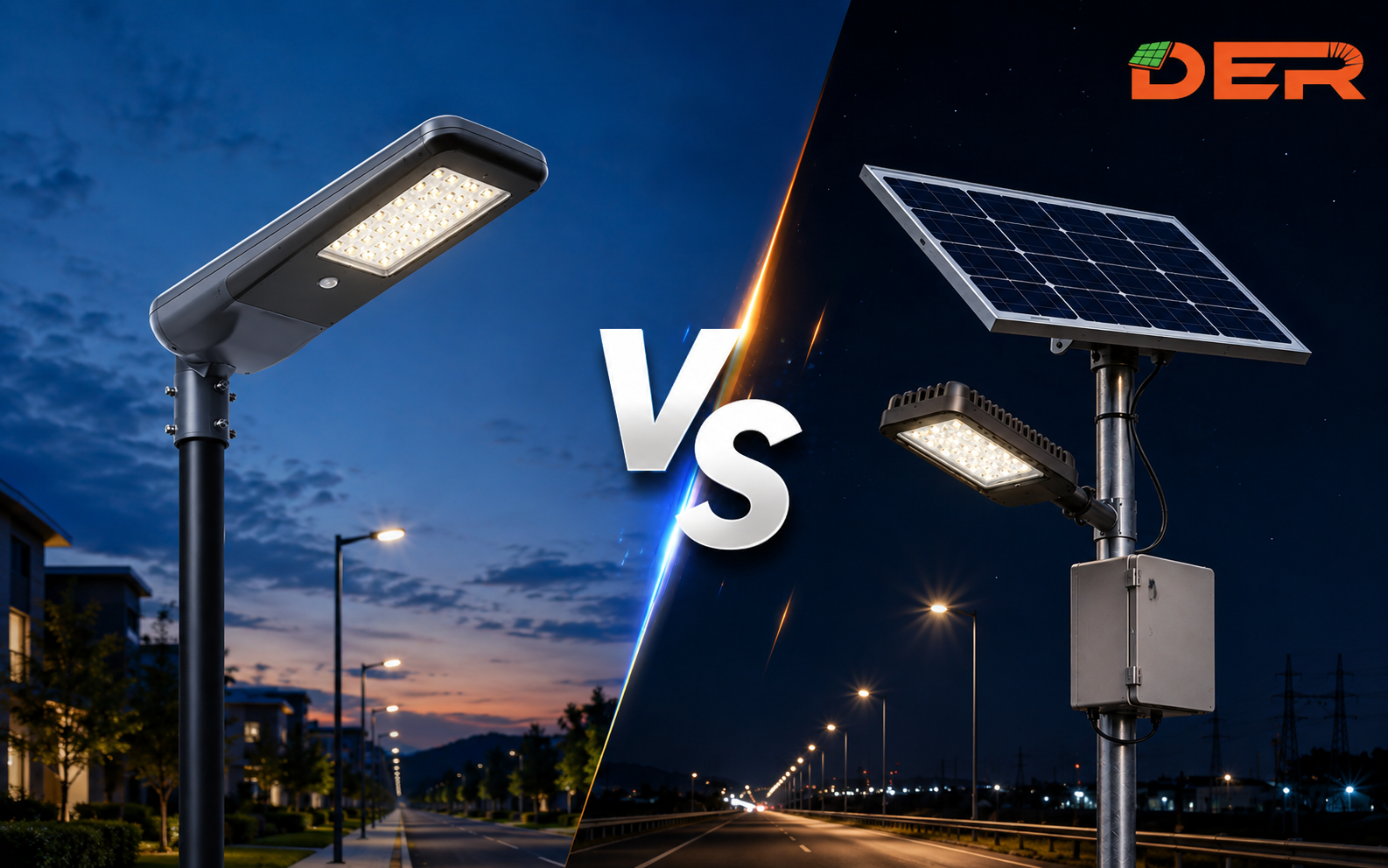
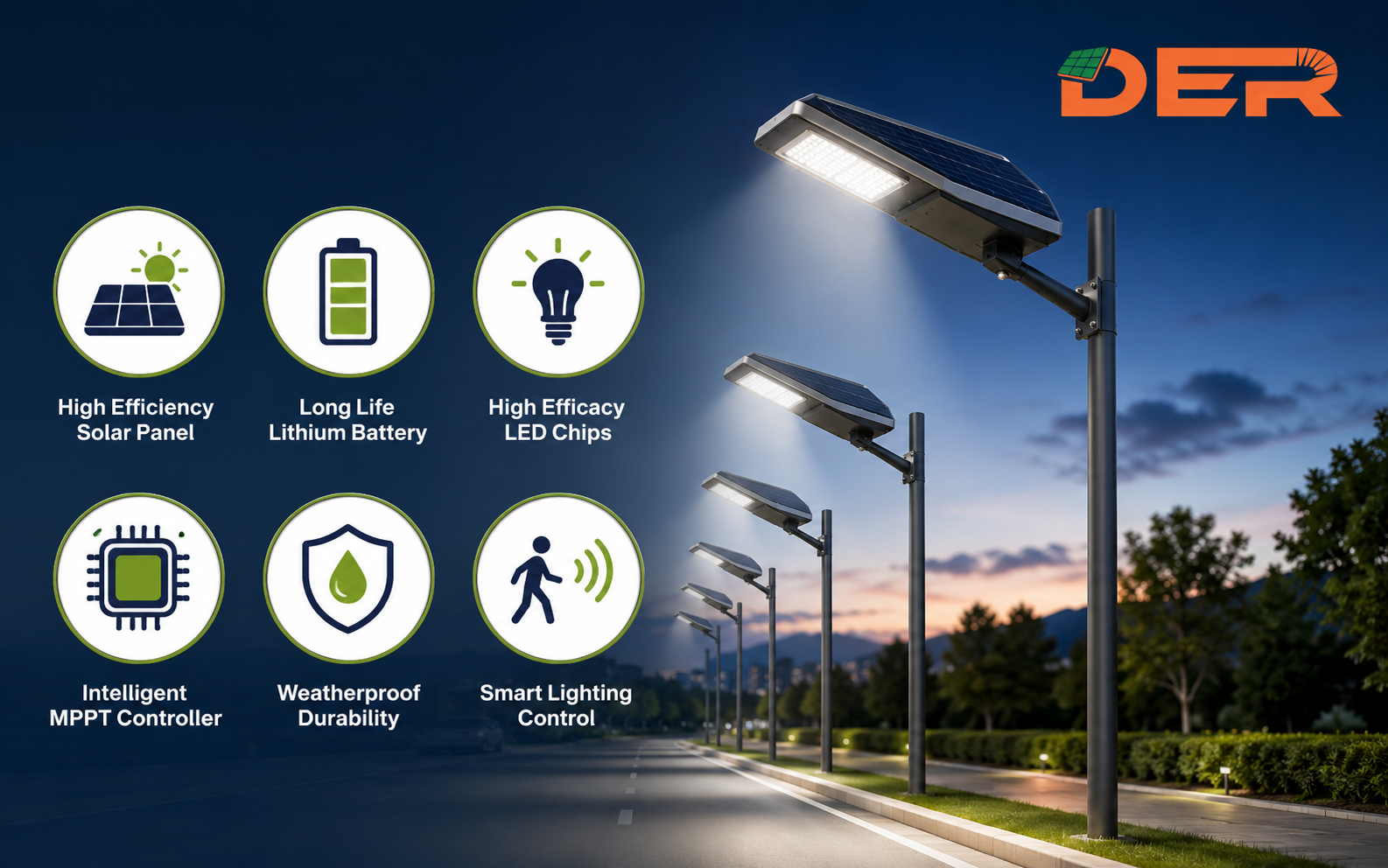
A high-quality all in one solar street light is defined by more than its wattage or price. The most important features include an efficient solar panel, a long-life lithium battery, high-efficacy LED chips, an intelligent charge controller, durable housing, effective thermal management, and reliable weather protection.
Together, these components determine brightness, runtime, service life, and long-term reliability.
Many buyers compare all in one solar street lights using wattage or unit price alone.
This approach misses the bigger picture. Real product quality depends on how the entire system works together, from the solar panel down to the housing that protects every internal part.
Key Takeaways
- High-quality products rely on the performance of the complete system, not just one component.
- Solar panel efficiency affects daily energy harvesting.
- Battery quality determines runtime and service life.
- LED efficacy influences brightness and energy consumption.
- MPPT controllers improve charging efficiency.
- Effective thermal management protects LEDs and batteries.
- Durable housing and environmental protection extend outdoor lifespan.
- Certifications and warranties help buyers assess product reliability.
What Features Should Buyers Evaluate in a High-Quality All in One Solar Street Light?
Before comparing brands, it helps to understand which components actually drive performance in an all in one integrated solar street light. Each part plays a specific role, and weakness in any single area can undermine the rest of the system.
The main features buyers should evaluate are:
- Solar panel quality
- Battery chemistry and capacity
- LED performance and efficacy
- Charge controller type
- Optical system and light distribution
- Housing material and build quality
- Heat dissipation
- Weather resistance and IP rating
- Smart lighting controls
- Certifications and third-party testing
- Warranty and manufacturer support
Solar Panel Quality
The solar panel determines how much energy an all in one solar led street light can capture each day. A higher-quality panel charges the battery faster and performs better even under weak sunlight.
Most professional manufacturers of all in one sola street lights use a monocrystalline solar panel rather than a polycrystalline one. Monocrystalline photovoltaic (PV) modules generally offer higher solar panel efficiency because their single-crystal structure allows electrons to move with less resistance.
This translates into stronger energy conversion efficiency, especially in cloudy or low-light conditions.
Panel size matters too, but it should never be judged on its own. A large panel with poor conversion efficiency can underperform a smaller, high-efficiency panel. Buyers should look at the actual charging output rather than the physical dimensions of the panel.
Ultimately, panel efficiency affects the entire system downstream. Solar panel efficiency influences charging efficiency, which affects battery capacity utilization, which then determines runtime and autonomy during extended cloudy periods.
Lithium Battery Quality
Battery quality determines how long an all in one solar street light can run between charges and how many years it lasts before replacement, making it one of the most important specs to evaluate.
Two chemistries dominate the market. Lithium iron phosphate (LiFePO₄) batteries are generally preferred for outdoor lighting due to strong thermal stability and better tolerance for deep discharge cycles. Standard lithium-ion batteries can also perform well, but they’re more sensitive to temperature extremes and degrade faster under repeated deep discharge.
Battery capacity sets the ceiling for stored energy, while cycle life determines longevity. A battery rated for 2,000 or more charge cycles typically maintains useful capacity for 5 to 10 years, depending on climate and usage. Quality LiFePO₄ batteries also operate reliably across a wide range, often -20°C to +60°C, though this varies by manufacturer.
Ultimately, battery quality determines autonomy, or how many consecutive cloudy days the light can run on stored energy alone. This is a critical spec for importers sourcing for regions with variable weather.
LED Performance
LED performance is often misunderstood by buyers who focus only on wattage. Two products with identical wattage can produce very different amounts of usable light, depending on the quality of their LED chips and LED module design.
Lumens measure total light output, while lumens per watt (lm/W) measure efficacy, or how much light is produced per unit of energy consumed. Quality LED chips commonly achieve 160 to 220 lm/W, depending on the manufacturer and product grade.
A higher lm/W rating means the light can produce more brightness while drawing less power from the battery, which extends runtime.
Chip quality affects more than brightness. It also affects lumen maintenance, which describes how well a light retains its original brightness over time. Poor-quality chips degrade faster and lose light output well before their rated lifespan ends.
Color temperature and CRI (Color Rendering Index) also matter for road lighting applications.
Color temperature affects how the light appears to the human eye, while CRI indicates how accurately colors are rendered under that light. Neither of these figures shows up in headline wattage numbers, which is exactly why wattage alone is a misleading indicator of quality.
Charge Controller
The charge controller functions as the brain of an all in one led solar street light system. It manages how energy flows from the solar panel into the battery and protects the battery from damage caused by overcharging or excessive discharge.
There are two main controller types. MPPT (Maximum Power Point Tracking) controllers continuously adjust electrical conditions to extract the maximum possible energy from the solar panel throughout the day.
PWM (Pulse Width Modulation) controllers are simpler and less expensive, but they typically capture less usable energy, particularly during partial cloud cover or low-angle sunlight.
An MPPT controller improves charging efficiency, which in turn extends battery lifespan by reducing stress from inefficient charging patterns.
This is one of the clearest examples of how one component affects the reliability of the entire system. Intelligent charging also includes battery protection features that prevent deep discharge and thermal stress, both of which shorten battery life over time.
Optical Lens and Light Distribution
Optical design is one of the most overlooked features in all in one solar street light pole comparisons, yet it has a direct impact on road safety and lighting uniformity.
The lens shapes how light spreads across the road surface. A well-designed optical lens uses a specific beam angle to control light distribution, often using batwing optics that widen the beam to the sides.
This design reduces hotspots directly beneath the fixture and reduces dark spots between poles, resulting in more uniform illumination across the entire road.
Beam angle should be matched to road width and pole height. A narrow beam angle on a wide road creates uneven lighting with bright patches and shadowed gaps. A properly matched beam angle produces consistent illuminance from edge to edge, which improves both visibility and safety.
Thermal Management
Heat is one of the biggest threats to LED lifespan and battery health, yet thermal management rarely gets discussed in product comparisons.
LED chips generate heat during operation, and excess heat accelerates lumen depreciation. This is why die-cast aluminum housing paired with internal heat sinks plays such an important role. Aluminum alloy conducts heat efficiently away from the LED module, keeping operating temperatures within a safer range.
Battery temperature matters just as much as LED temperature. Excessive heat around the battery compartment accelerates capacity loss and shortens cycle life.
Products with poor heat dissipation may look identical to higher-quality alternatives on a spec sheet, but they often fail years earlier because of accumulated thermal stress.
The relationship is straightforward. Better heat dissipation keeps LED temperature lower, which preserves lumen maintenance, which extends overall service life.
Housing Material and Build Quality
Housing might seem like a purely structural detail, but it directly affects durability, weather resistance, and thermal performance.
Most high-quality all in one solar street light manufacturers use die-cast aluminum for the housing rather than plastic or lower-grade metals. Aluminum alloy offers strong corrosion resistance, which matters greatly in coastal areas where salt exposure accelerates rust and material breakdown.
UV resistance is another important factor, since constant sun exposure can degrade lower-quality coatings and plastics over years of outdoor use.
Structural strength also depends on fastener quality and surface treatment. Poor-quality fasteners can loosen under vibration or wind load, while inadequate surface coatings allow corrosion to start at exposed edges. Housing quality is one of those features that only becomes obvious after several years in the field, which is why it deserves early attention during procurement.
Weather and Environmental Protection
Weather resistance determines whether an all in one solar street lights installation will hold up through years of rain, dust, wind, and temperature swings.
IP ratings describe protection against dust and water. IP65 means the fixture is protected against water jets and is dust protected, while IP66 means the fixture is dust-tight and protected against powerful water jets from any direction. Most reliable products carry at least an IP65 rating, and IP66 is common among premium models intended for harsh climates.
IK ratings measure impact resistance, which matters for public installations exposed to vandalism, falling debris, or accidental impact. A higher IK rating indicates the housing can absorb more mechanical shock without cracking.
Operating temperature range is another practical consideration. Many quality products are rated for -20°C to +60°C, though this varies by battery chemistry and component selection. Wind resistance also matters for pole-mounted fixtures, particularly in open areas or coastal regions where sustained wind loads are common.
Smart Lighting Controls
Smart controls separate a modern all in one solar led street light from older, less efficient designs. These features directly influence how efficiently stored energy is used each night.
A PIR (Passive Infrared) motion sensor detects movement and increases brightness when people or vehicles are nearby, then dims the light during quiet periods. Time control allows brightness levels to follow a programmed lighting profile that matches expected traffic patterns throughout the night.
Adaptive lighting combines these inputs to adjust output automatically rather than running at full brightness continuously.
Dimming during low-traffic hours conserves battery capacity, which directly extends autonomy during cloudy weather.
Some higher-end systems also include remote monitoring or IoT-based controls, allowing operators to check performance data or adjust settings without visiting each pole individually. For large installations, this can meaningfully reduce maintenance costs over the life of the project.
Certifications and Testing
Certifications provide buyers with independent verification of manufacturer claims, which becomes especially important in international procurement where in-person inspection is not always possible.
Common certifications and standards include IEC (International Electrotechnical Commission) compliance, CE marking for the European market, and RoHS certification confirming the restriction of hazardous substances. ISO 9001 certification indicates a documented quality management system at the manufacturing facility.
LM-80 and TM-21 reports are particularly relevant for LED performance claims. LM-80 testing measures actual lumen depreciation over thousands of hours, while TM-21 uses that data to project long-term lumen maintenance.
IP testing and IK testing should also be verified through third-party labs rather than taken solely from a manufacturer’s data sheet.
These certifications reduce procurement risk substantially. They give buyers a way to verify claims about durability, safety, and performance before committing to a large order.
Warranty and Manufacturer Support
Warranty terms and manufacturer support often reveal how confident a supplier is in their own product quality.
Warranty length varies across the market, and longer warranties generally signal stronger confidence in battery and LED longevity. Spare parts availability matters too, since replacement components like batteries or LED modules should be easy to source well after the original purchase. Technical support responsiveness becomes especially important for B2B buyers managing installations across multiple sites or countries.
OEM capability is worth confirming for distributors and importers who need customized specifications, branding, or packaging. Product documentation, including data sheets, test reports, and installation guides, should be complete and readily available before purchase rather than requested after the fact.
Which Features Have the Greatest Impact on Long-Term Performance?
No single feature determines the long-term performance of an all in one solar street light. That said, some components carry more weight than others when ranked by their overall impact.
Battery quality typically has the greatest influence, since it determines both runtime and how long the entire unit will function before major component replacement is needed. Solar panel efficiency ranks close behind because insufficient daily charging limits how much energy is available regardless of battery capacity.
Controller quality follows, since an MPPT controller directly affects how efficiently that limited solar energy gets converted into stored power.
LED efficacy matters for both brightness and energy consumption, while thermal management protects both the LED module and the battery from premature degradation. Housing quality and smart controls round out the list, contributing to durability and energy conservation respectively.
System balance matters more than any single standout specification. A product with an excellent battery but a weak controller will still underperform, since the controller limits how effectively that battery gets charged in the first place.
How Can Buyers Compare the Quality of different all-in-one solar street lights?
Comparing all-in-one solar street light manufacturers’ offerings becomes much easier with a structured checklist rather than relying on marketing claims alone.
Buyers should evaluate:
- Battery chemistry, ideally LiFePO₄ for outdoor durability
- Battery cycle life, looking for 2,000 or more rated charge cycles
- Solar panel efficiency and type, favoring monocrystalline panels
- LED efficacy in lm/W, ideally in the 160 to 220 range
- Controller type, favoring MPPT over PWM for most applications
- IP rating, with IP65 or IP66 preferred for outdoor reliability
- IK rating for impact resistance in public installations
- Warranty length and what it actually covers
- Certifications, including CE, RoHS, IEC, and ISO 9001
- Evidence of manufacturer testing, such as LM-80 or TM-21 reports
- Application suitability, matching pole height and beam angle to the installation site
This checklist gives procurement teams a practical way to compare products on substance rather than surface-level specifications.
Key Features of High-Quality vs Lower-Quality All in One Solar Street Lights
| Feature | High-Quality Product | Lower-Quality Product |
| Solar Panel | Monocrystalline, high conversion efficiency | Polycrystalline, lower efficiency |
| Battery | LiFePO₄, 2,000+ cycles | Generic lithium-ion, shorter cycle life |
| LED Efficacy | 160–220 lm/W | Below 130 lm/W |
| Controller | MPPT | PWM |
| Housing | Die-cast aluminum | Thin metal or plastic |
| IP Rating | IP65/IP66 | IP54 or unspecified |
| Certifications | CE, RoHS, IEC, ISO 9001 | Limited or unverifiable |
| Warranty | 3–5 years or longer | Under 2 years |
Get a Quote from DER
Looking for a reliable all-in-one solar street light manufacturer for your next project? DER designs and manufactures high-quality all-in-one solar street lights built with LiFePO₄ batteries, high-efficacy LED chips, MPPT controllers, and durable die-cast aluminum housing engineered for demanding outdoor conditions.
Whether you’re sourcing for municipal projects, coastal installations, or off-grid roads, our team can help you select the right specifications for your application and climate. We offer OEM support, full product documentation, and responsive technical support for distributors and importers worldwide.
Contact DER today to request a quote, sample unit, or technical datasheet.
Conclusion
A high-quality all in one solar street light integrates a monocrystalline solar panel, a LiFePO₄ battery, efficient LED chips, and an MPPT controller into one weatherproof housing, capturing solar energy by day and delivering adaptive, low-maintenance lighting at night. Buyers should look beyond wattage and price, focusing on battery chemistry, panel efficiency, controller type, thermal management, IP ratings, and certifications to ensure reliable long-term performance.
Frequently Asked Questions (FAQs):
No. LED efficacy, optical design, battery capacity, and controller quality have a greater impact on overall performance than wattage alone.
LiFePO₄ batteries are generally preferred because they offer long cycle life, improved thermal stability, and better safety for outdoor applications.
An MPPT controller continuously adjusts charging conditions to maximize energy harvested from the solar panel, improving charging efficiency and battery performance.
Most high-quality products are rated at least IP65 or IP66, providing protection against dust and water for long-term outdoor use.
No single feature determines quality. Reliable long-term performance depends on the combined performance of the solar panel, battery, LED module, controller, thermal management, and housing.