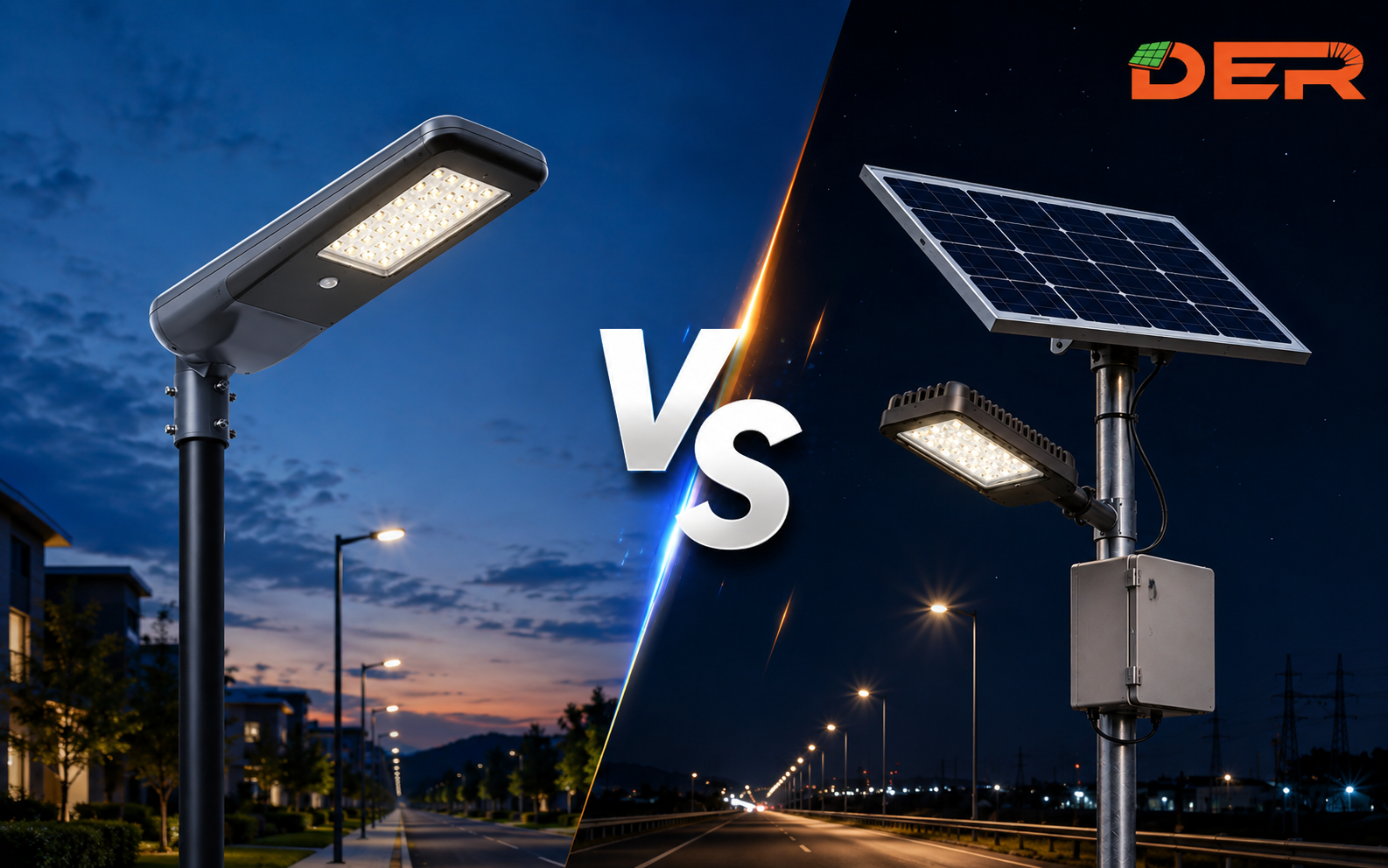
An all in one solar street light generally delivers better value for standard projects, while a split solar street light remains the better option for certain high-power applications. The right choice depends on project size, installation conditions, lighting requirements, maintenance capabilities, local climate, and long-term operating costs.
For most small-to-medium projects, an all in one solar street light typically delivers greater value because of simpler installation and lower lifecycle costs.
Split solar street lights remain the preferred choice for certain high-power and specialized applications where flexibility matters more than simplicity.
All in One Solar Street Light Vs Split Solar Street Light – A Head-to-Head Comparison
| Feature | All in one Solar Street Light | Split Solar Street Light |
| Overall Value | Best for most standard projects | Best for specialized, high-power projects |
| Components | Integrated into one housing | Installed separately |
| Installation | Fast and simple | More complex and time-consuming |
| Wiring | No external wiring | Requires external cables and connections |
| Initial Installation Cost | Lower | Higher |
| Maintenance | Simpler routine maintenance | Easier component-level servicing |
| Battery Capacity | Limited by integrated design | Supports larger battery sizes |
| Performance Flexibility | Moderate | High |
| Transportation & Logistics | Compact, easier to ship | More packaging and shipping volume |
| Theft Resistance | Better (fewer exposed components) | Lower (battery and cables are exposed) |
| Best Applications | Residential roads, parking lots, communities, urban roads | Highways, expressways, industrial and large infrastructure projects |
What Is the Difference Between All in One and Split Solar Street Lights?
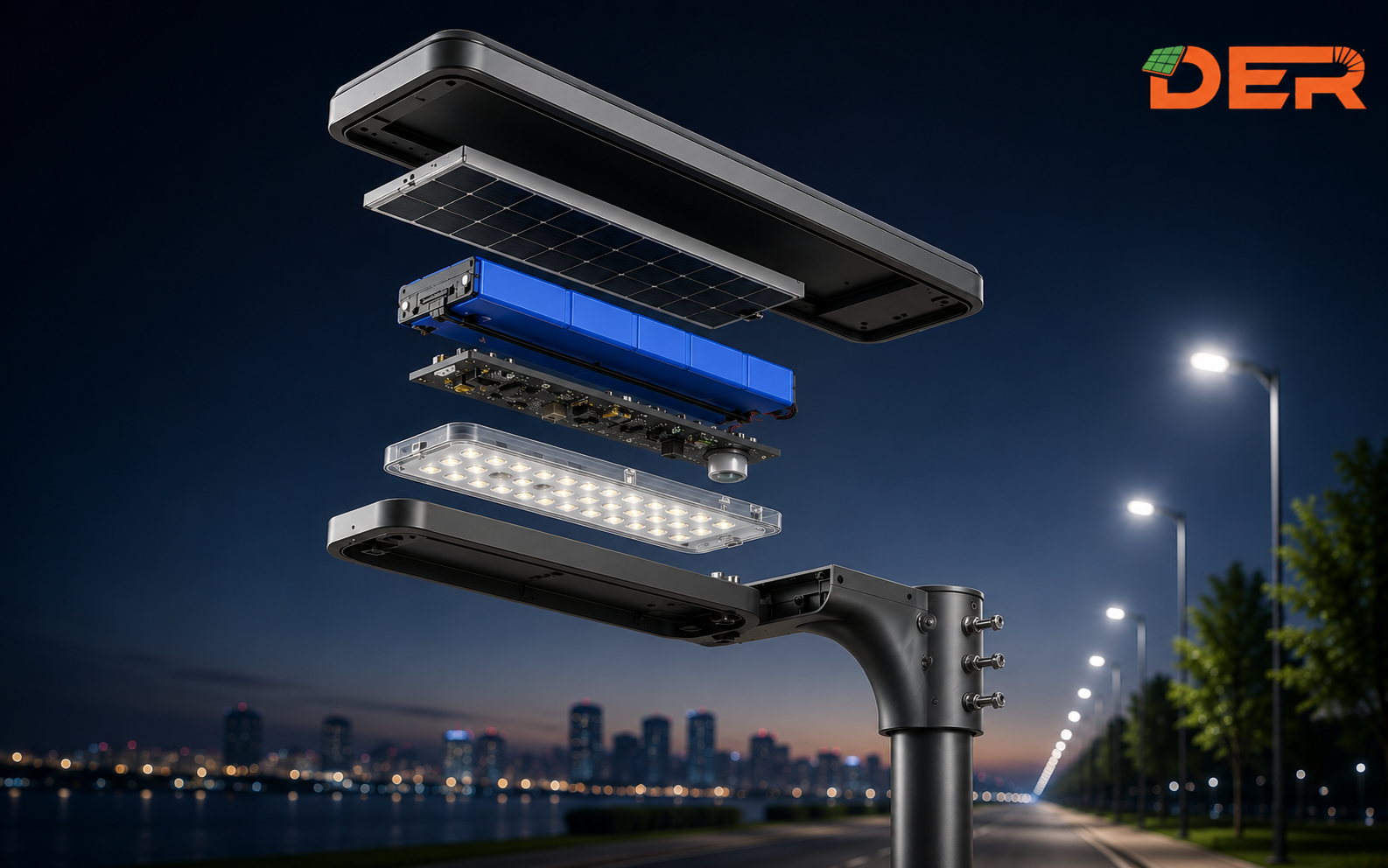
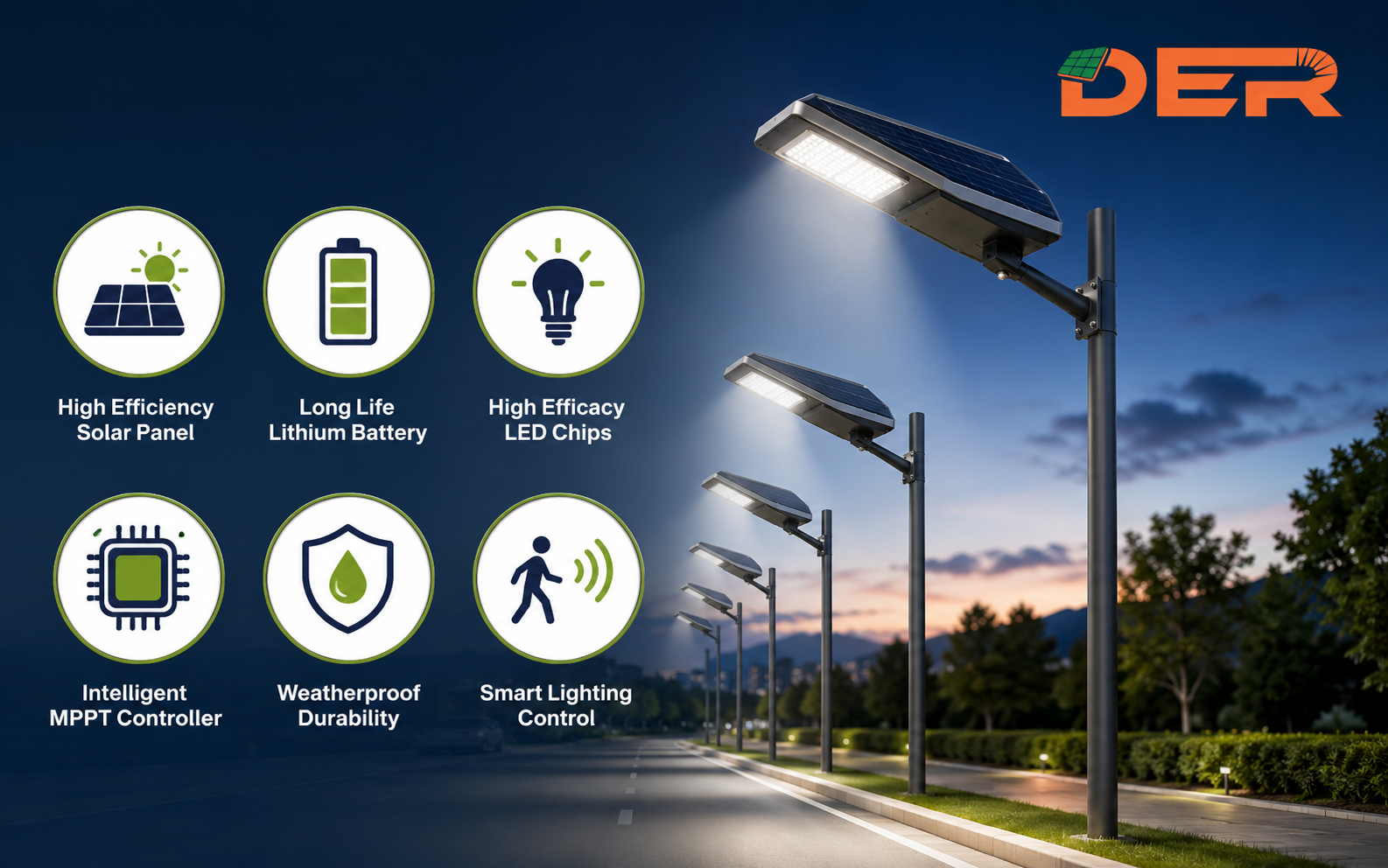
An all in one solar street light integrates the LED module, solar panel, lithium battery, charge controller, and motion sensor into a single housing mounted on the pole. A split solar street light separates these components, placing the battery in a separate enclosure and connecting everything through external wiring.
These two designs exist because different projects prioritize different things. Some buyers want fast, low-cost installation. Others need higher power output or easier component-level upgrades, which favor a split-type solar street light.
How Does an All in One Solar Street Light Work?
The working mechanism of all in one solar street lights is simple. The solar panel generates electricity during the day and charges the lithium battery inside the same unit. At night, the controller draws power from the battery to run the LED light source, often adjusting brightness through motion sensor input. Because every component sits in one housing, there is no external wiring between parts.
How Does a Split Solar Street Light Work?
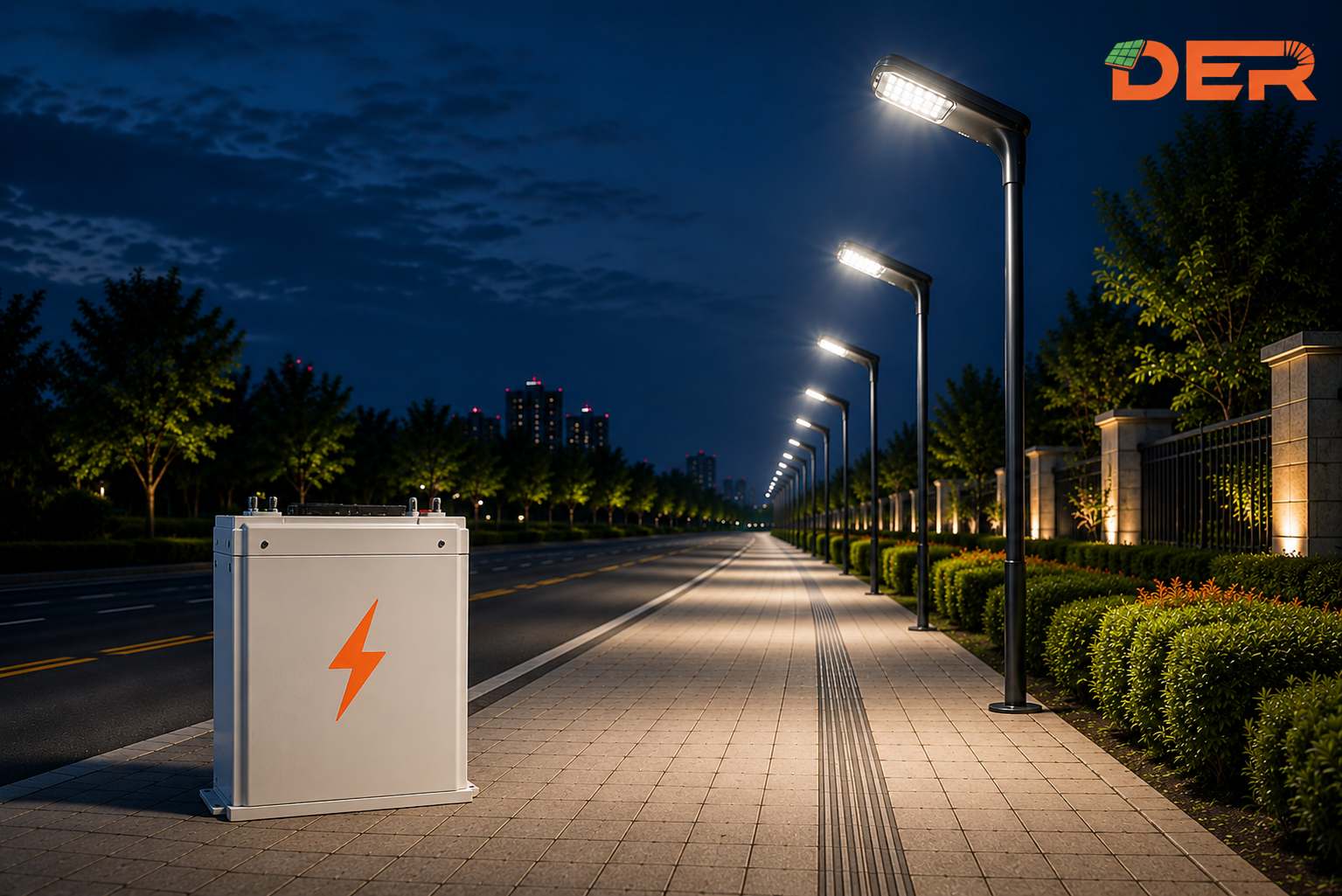
The solar panel, LED head, and battery are still connected electrically, but the battery pack sits in a separate box, usually mounted lower on the pole or buried nearby. Cables and a junction box link the components together. This separation allows for larger battery capacity and easier access for maintenance crews.
Quick Comparison
| Feature | All in One | Split |
| Components | Integrated | Separate |
| Wiring | None | Required |
| Installation | Simple | More complex |
| Maintenance | Easier | More technical |
| Flexibility | Lower | Higher |
Which System Delivers Better Overall Value?
All in one solar street lights generally deliver better value for standard projects because they reduce installation time, cabling, and labor costs. Value should never be judged by purchase price alone.
A proper evaluation looks at equipment cost, installation cost, transportation, maintenance, and expected service life together.
Initial Equipment Cost
Split systems often carry a lower sticker price for the fixture itself, since the battery and controller are sold as separate line items. However, an all in one integrated solar street light frequently costs less overall once wiring, brackets, and enclosures are included in the total package.
Installation Cost
Installation cost includes labor, wiring, and trenching. An all in one solar street light pole requires only a single mounting step, since there is no cable routing between separate components.
Installation can represent a significant percentage of total project cost, particularly in remote areas where labor and travel expenses are high. Split systems typically demand more installation time because crews must dig trenches, run cables, and wire the junction box correctly.
Transportation and Logistics
This factor is rarely discussed, yet it matters a great deal for importers and distributors. An all in one led solar street light ships as one compact unit, which reduces packaging materials and improves container loading efficiency.
Split systems require separate packaging for the battery box, panel, and pole hardware, which increases shipping volume and freight costs per unit. For B2B buyers moving large quantities, this difference can meaningfully affect landed cost.
Maintenance Costs
Maintenance costs cover inspection, servicing, wiring failure repairs, and battery replacement. All-in-one systems are generally easier to inspect since everything is accessible from the top of the pole.
Split systems offer better repair accessibility for the battery specifically, since technicians can service the battery box without working at height. Each design has tradeoffs, and the better fit depends on the maintenance team’s tools and experience.
Expected Service Life
Service life depends more on component quality than on system architecture. LED chips, LiFePO4 batteries, and MPPT controllers all have their own degradation curves regardless of whether they sit in one housing or several.
A well-built all in one solar street light manufacturer and a well-built split-system manufacturer can both produce fixtures with similar operating lifespans if component grades are comparable.
Total Cost of Ownership (TCO)
Total cost of ownership combines initial purchase price, installation cost, maintenance cost, replacement cost, and downtime cost into a single lifecycle figure.
This number reflects the real project cost far better than upfront price alone. Buyers who compare only the purchase price often underestimate long-term expenses tied to wiring failures, trenching repairs, or component replacement in split systems.
Lifecycle Cost Comparison
| Cost Factor | All in One | Split |
| Equipment Price | Moderate | Variable |
| Installation Labor | Lower | Higher |
| Wiring & Trenching | None | Required |
| Maintenance Frequency | Lower | Higher |
| Replacement Approach | Whole-unit | Component-level |
How Do All in One and Split Systems Compare Across Key Performance Factors?
Performance depends on energy generation, battery behavior, lighting output, and thermal management. Both designs can perform well, but each has specific strengths tied to its layout.
Energy Generation
Solar panel size and orientation determine how much energy the system generates each day. Panel tilt should match the project’s latitude to maximize solar harvest across the year.
Split systems sometimes support larger panels since the battery does not need to fit in the same housing, which can improve charging efficiency in lower sunshine hour regions.
Battery Performance
Most modern systems use LiFePO4 batteries because they tolerate deeper depth of discharge and more charging cycles than older lead-acid batteries. Battery performance also depends heavily on operating temperature.
A battery that runs cooler will generally degrade more slowly over time.
Lighting Performance
Lighting performance is measured through lumen output, light distribution, and lighting uniformity across the road surface.
LED chips commonly achieve 160 to 220 lumens per watt, depending on the manufacturer and product grade. Runtime and autonomy determine how long the light stays powered through the night, especially during shorter winter days.
Performance During Cloudy Weather
Can all in one solar street lights work during cloudy weather? Yes. The battery stores surplus energy generated during sunny periods, which allows the light to keep operating through several consecutive cloudy days, depending on battery capacity and lighting settings.
Backup days are typically programmed into the controller settings, allowing the system to reduce brightness automatically as stored energy runs low.
Heat Dissipation
Heat dissipation is one of the most overlooked comparison points. Because the battery in a split system sits away from the LED driver and pole surface, it generally stays cooler than a battery packed tightly into an integrated housing.
Lower battery temperature supports longer service life, since heat is one of the main drivers of lithium battery degradation.
Wind Resistance
Anall in one solar street light has a more compact profile, which can reduce wind loading on the pole. Split systems place the panel further from the pole in some configurations, which requires careful pole engineering to handle wind load safely.
Reliability
Reliability is closely tied to the number of external connection points. All in one designs eliminate most external wiring, which removes common failure points caused by loose connections or cable damage.
Split systems introduce more connection points, which increases the chance of wiring-related failures over time, though it also allows easier isolation of a failed part.
Which System Is Easier to Install and Maintain?
All in one solar street lights are generally easier and faster to install, since there is no trenching or cable routing involved. Split systems require more planning but offer easier access to individual components afterward.
Installation Complexity
Installing an all in one solar street light pole typically involves mounting the pole, attaching the integrated fixture, and commissioning the unit.
Split system installation adds pole mounting, cable routing, junction box wiring, and battery box placement, which extends labor time and requires more skilled technicians.
Maintenance Requirements
Preventive maintenance for all-in-one systems mainly involves checking the panel surface and confirming sensor function. Split systems require additional checks on cable connections and the junction box, since these are common points of wear.
Component Replacement
All-in-one systems are usually serviced through whole-unit replacement, since components are not designed to be separated easily. Split systems allow modular replacement, meaning a technician can swap just the battery or controller without touching the rest of the fixture.
Installation & Maintenance Comparison
| Factor | All in One | Split |
| Installation Time | Faster | Slower |
| Skill Level Required | Lower | Higher |
| Replacement Approach | Whole-unit | Modular |
| Field Serviceability | Simple | Flexible |
Which System Performs Better in Different Applications?
The right system depends on the power requirements and operating profile of the project, not just the location type.
Residential Roads and Communities
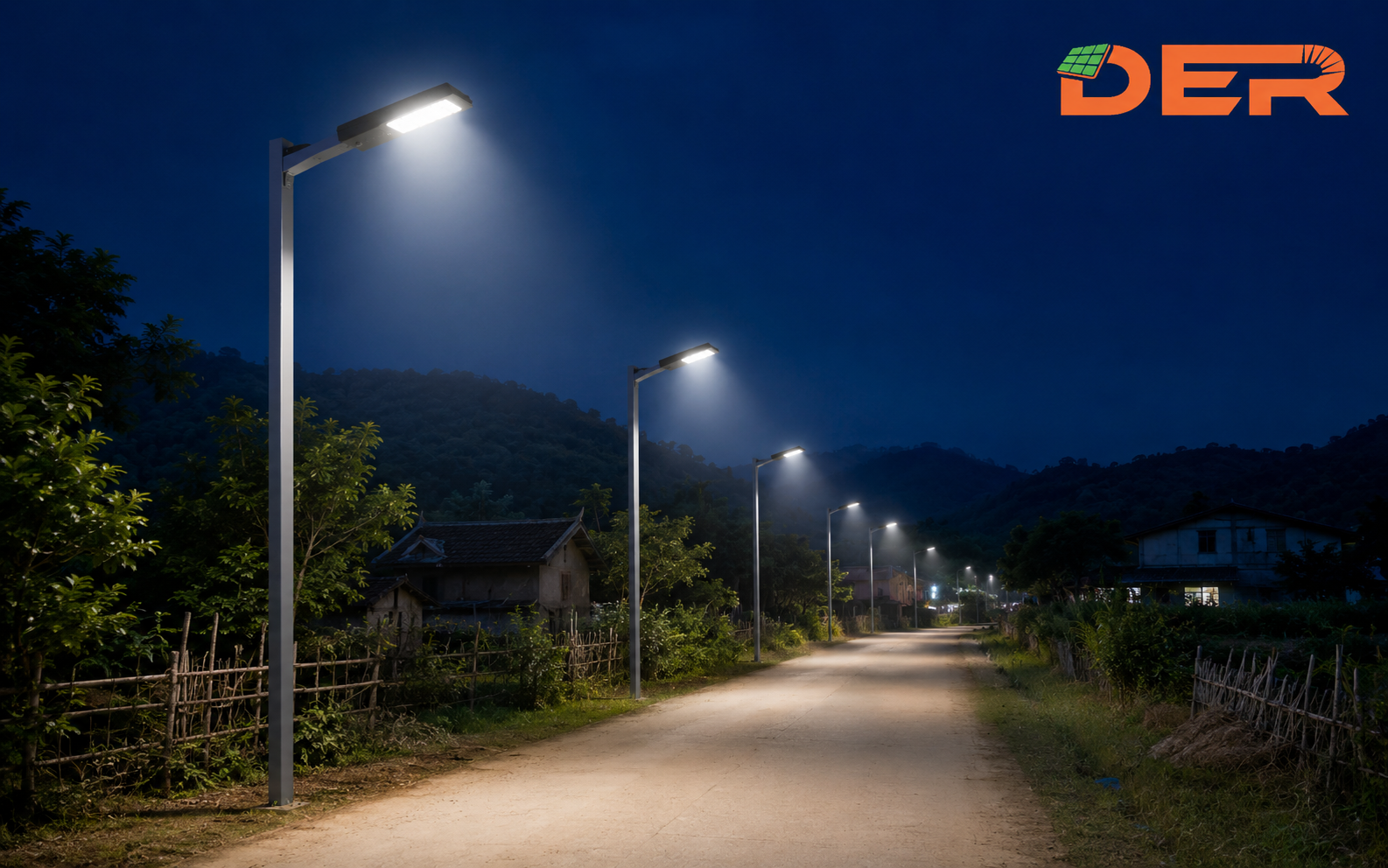
An all in one solar led street light such as an A Series unit works well here because residential roads generally need moderate lumen output and shorter operating hours, which suits a compact integrated design.
Parking Lots and Commercial Areas
A C Series all in one unit is often recommended for parking lots because these areas benefit from easy installation across multiple poles without extensive trenching.
Urban Roads
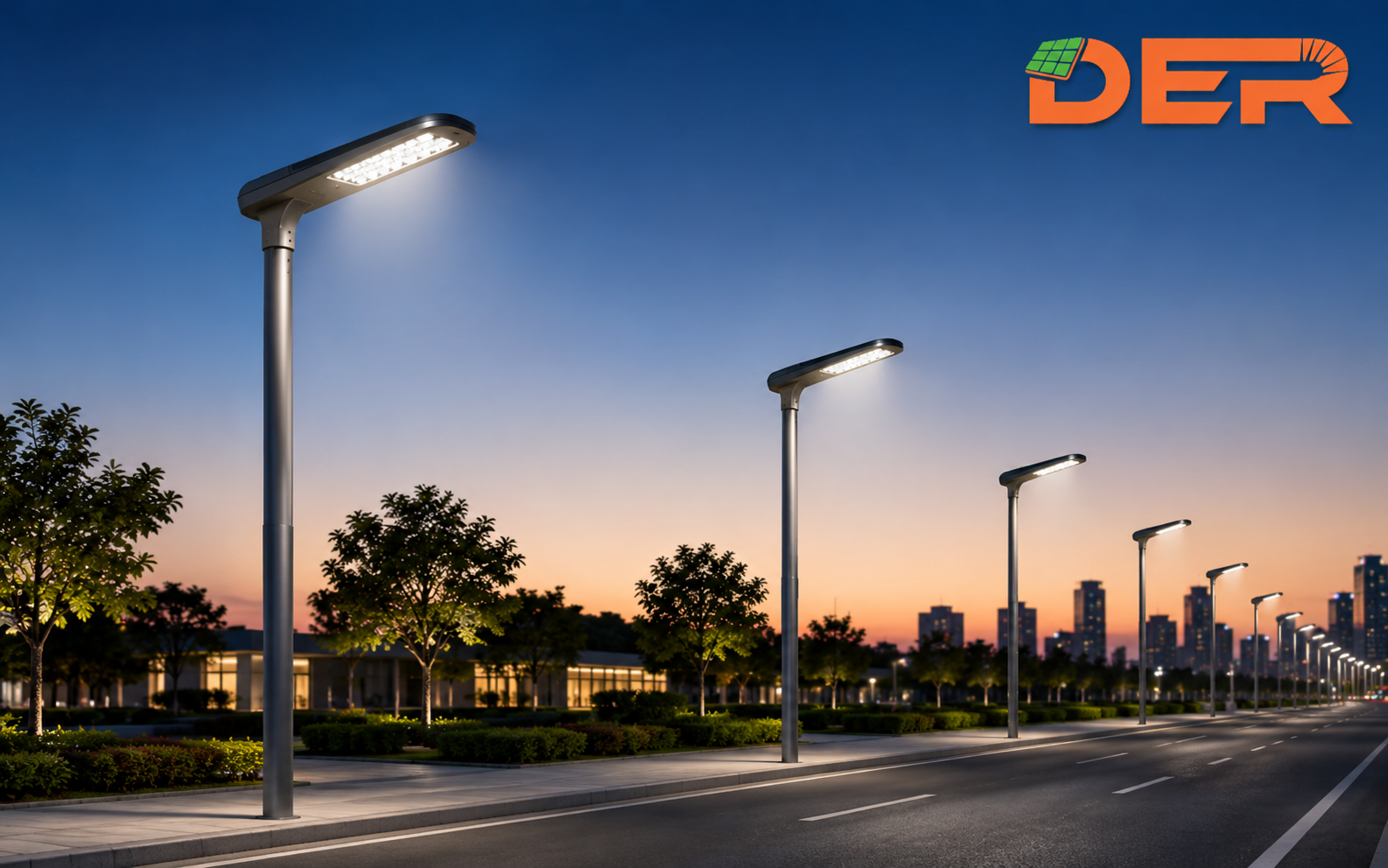
C Series fixtures also perform well on urban roads, where consistent lighting uniformity and simple maintenance schedules matter more than maximum power output.
Industrial Sites
Industrial sites often benefit from a B Series configuration, since these locations may need higher wattage and longer runtime to cover larger operating areas safely.
Highways and Expressways
Split systems may still be preferred here, since highways often require higher-power lighting and larger battery capacity than a single integrated housing can practically support. A D Series split configuration can better accommodate these higher-power requirements while keeping the battery accessible for maintenance crews.
Application Recommendation
| Application | Better Choice | Why |
| Residential roads | All-in-one (A Series) | Moderate output, simple install |
| Parking lots | All-in-one (C Series) | Fast deployment across multiple poles |
| Urban roads | All-in-one (C Series) | Uniform lighting, low maintenance |
| Industrial sites | All-in-one (B Series) | Higher wattage, longer runtime |
| Highways/expressways | Split (D Series) | Higher power, larger battery capacity |
What Factors Should Buyers Evaluate Before Choosing?
Buyers should evaluate lighting requirements, budget, climate, installation expertise, and long-term maintenance capability before choosing between an all-in-one and a split system.
Lighting Requirements
Lighting requirements should be based on road width, traffic type, and required lumen output rather than assumptions carried over from a previous project.
Project Budget
Project budget should account for total cost of ownership rather than purchase price alone, since installation and maintenance expenses accumulate over the system’s lifespan.
Local Climate
Local climate affects both solar harvest and battery temperature. Regions with fewer sunshine hours may need larger battery capacity to maintain reliable autonomy through cloudy stretches.
Available Installation Expertise
Projects with limited access to skilled electricians generally benefit from all-in-one systems, since they avoid complex wiring work.
Maintenance Resources
Maintenance resources should match the system’s servicing model. Teams without specialized training may prefer the simpler upkeep of an integrated design.
Risk of Theft or Vandalism
Theft resistance is an underexplored factor in many comparisons. All-in-one systems reduce exposed wiring and separate battery enclosures, which lowers the risk of cable theft and vandalism in high-risk areas.
Future Expansion Plans
Split systems sometimes make more sense for buyers planning future expansion, since components like the battery or panel can be upgraded independently without replacing the entire fixture.
What Industry Standards and Certifications Should Buyers Check?
Buyers should check IP ratings, CE marking, RoHS compliance, and relevant battery certifications before finalizing a solar street lighting purchase. IP65 or IP66 ratings confirm that the fixture is dust-tight and protected against water jets, which matters for outdoor durability.
Standards from the International Electrotechnical Commission (IEC) and International Organization for Standardization (ISO) provide additional assurance around safety and build quality.
Guidance from the Illuminating Engineering Society (IES) can also help buyers evaluate whether lighting uniformity and brightness levels meet the intended application.
Which System Is the Better Choice for Different Buyers?
Importers
Importers benefit from the reduced shipping volume and simpler logistics of an all in one solar street light, since fewer separate components mean lower freight costs per unit.
Distributors
Distributors often prefer all-in-one systems because they are easier to explain and sell to end customers who want a straightforward installation process.
Wholesalers
Wholesalers moving high volumes may value the packaging efficiency of an all in one integrated solar street light, which reduces warehouse space per unit.
Contractors
Contractors working on tight installation schedules generally favor all-in-one systems, since faster installation reduces labor cost per project.
Project Planners
Project planners handling large-scale or high-power installations, such as highways, may lean toward split systems for the added flexibility in battery sizing and future component upgrades.
Looking for a Reliable All in One Solar Street Light Manufacturer?
If your project is best suited to an all in one solar street light, choosing a trusted manufacturer is just as important as selecting the right system. At DER Lighting, we specialize exclusively in integrated solar street lights designed for reliable performance, simplified installation, and long-term value.
Whether you’re an importer, distributor, wholesaler, or OEM/ODM buyer, our team can help you identify the right solution for your market and project requirements.
Explore our all in one solar street light series or contact our team to discuss your project needs.
Conclusion
Choosing between an all in one and a split solar street light comes down to balancing project requirements with long-term value. All-in-one systems typically offer faster installation, lower maintenance, and reduced lifecycle costs, making them ideal for many standard applications.
Split systems remain valuable for higher-power projects that require greater design flexibility. By evaluating performance, installation, maintenance, and total cost of ownership together, buyers can select the solution that best fits their project’s needs.
Frequently Asked Questions
All in one solar street lights are generally more cost-effective for small-to-medium projects because of lower installation and maintenance costs. Split systems can become more cost-effective for high-power projects where component-level flexibility reduces long-term expenses.
Not necessarily. Service life depends more on component quality, such as the battery chemistry and LED grade, than on whether the system is integrated or split.
All-in-one systems are generally easier to maintain for routine inspections, while split systems offer easier access for battery-specific repairs.
They can be suitable for lower-traffic highways, but split systems are often preferred for major highways and expressways due to higher power and battery capacity requirements.
Yes. Stored battery energy allows the light to continue operating through several consecutive cloudy days, depending on battery capacity and lighting settings.
All in one solar street lights are generally better for importers and distributors because of lower shipping volume and simpler logistics.
LiFePO4 batteries are recommended for both system types because of their long service life and tolerance for deep discharge cycles.
Split systems allow easier component upgrades, such as increasing battery capacity. All-in-one systems typically require whole-unit replacement instead of individual upgrades.