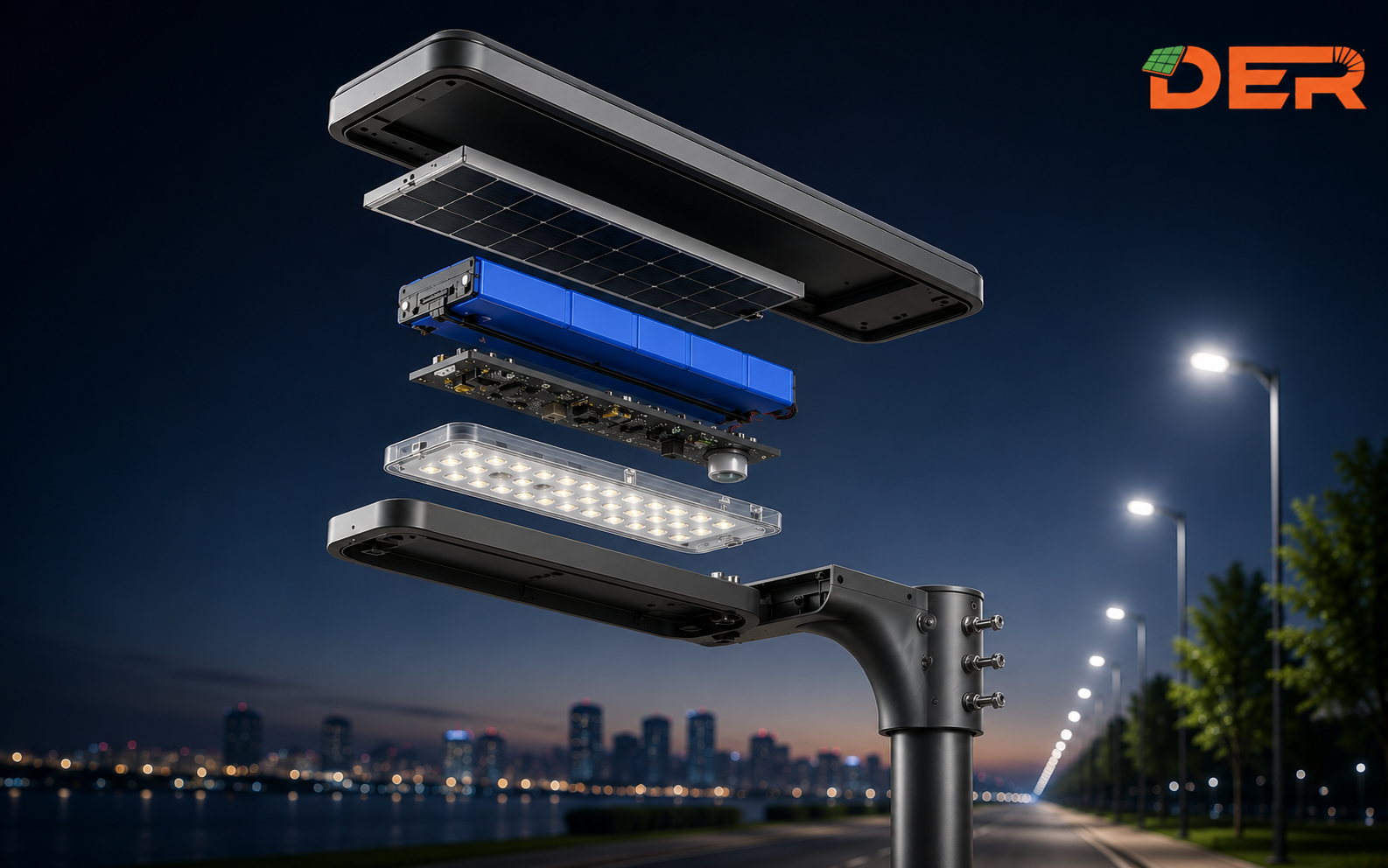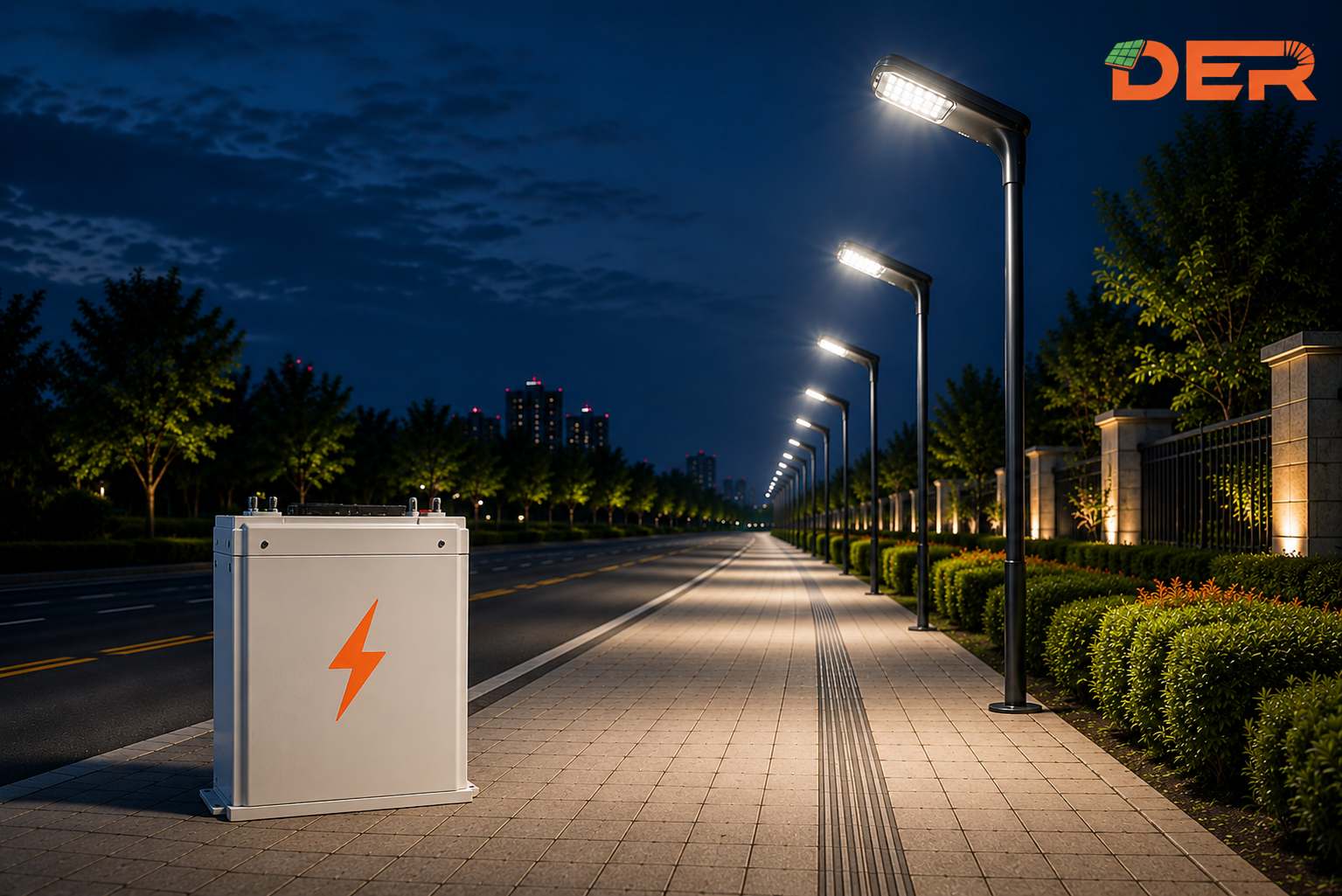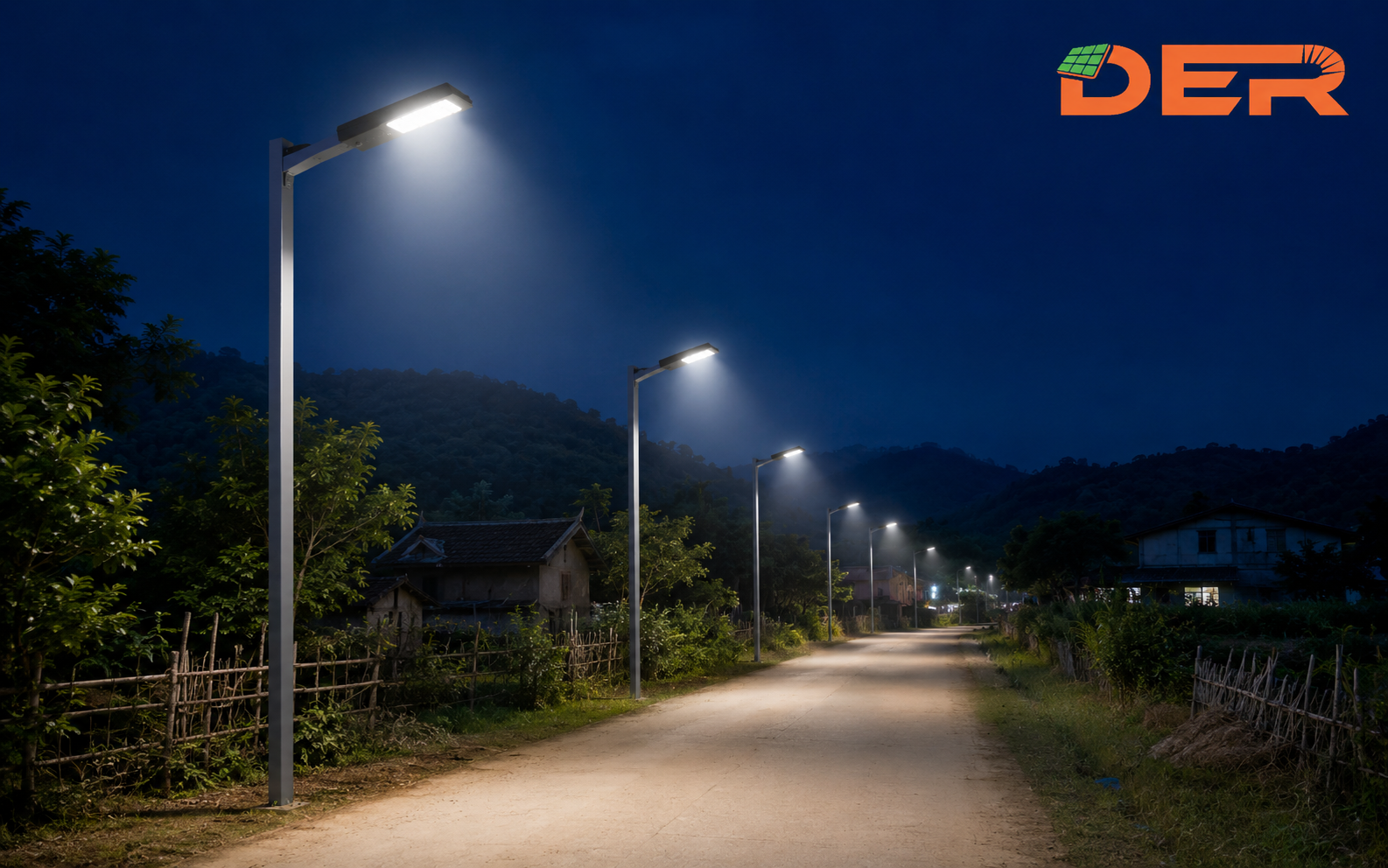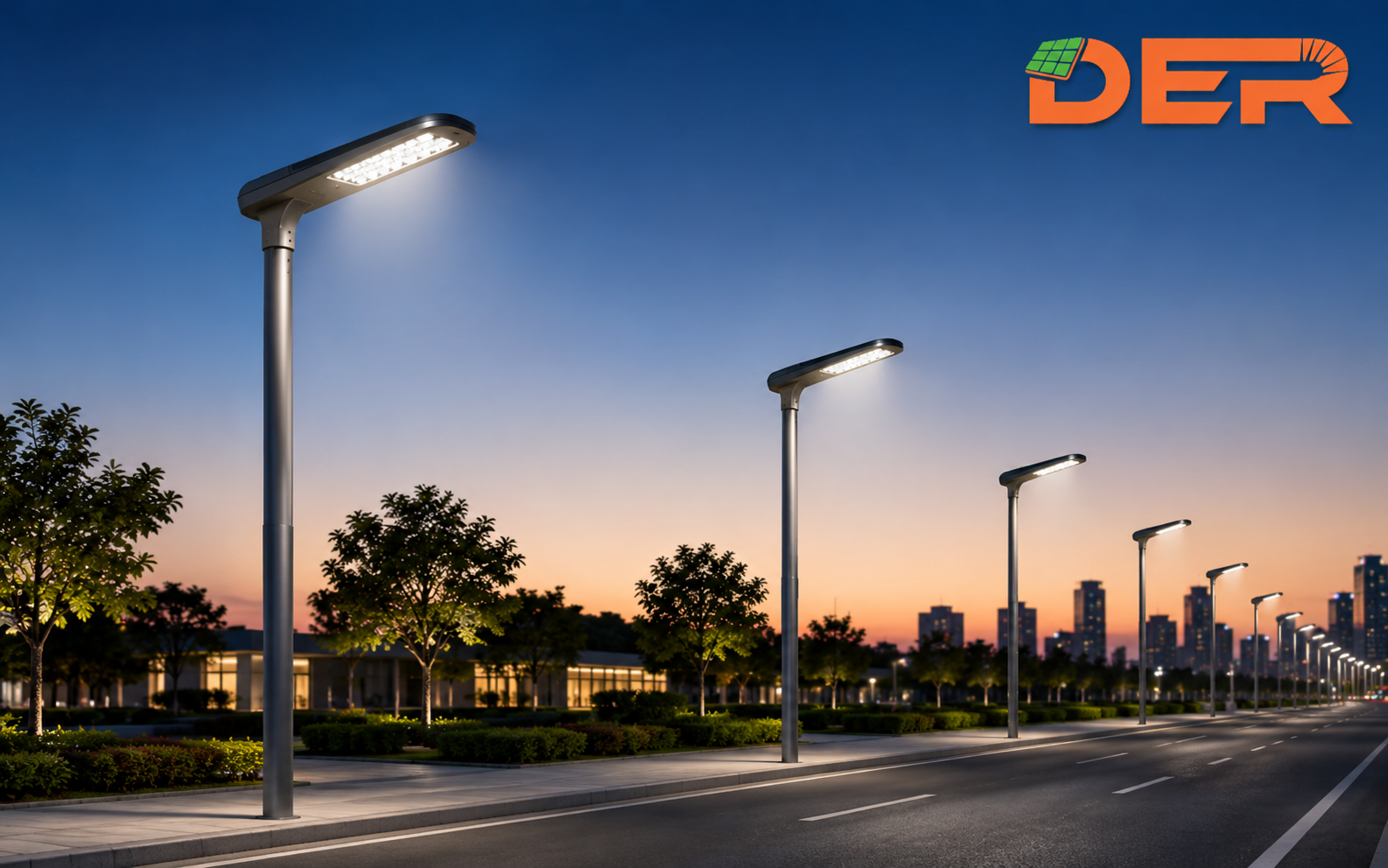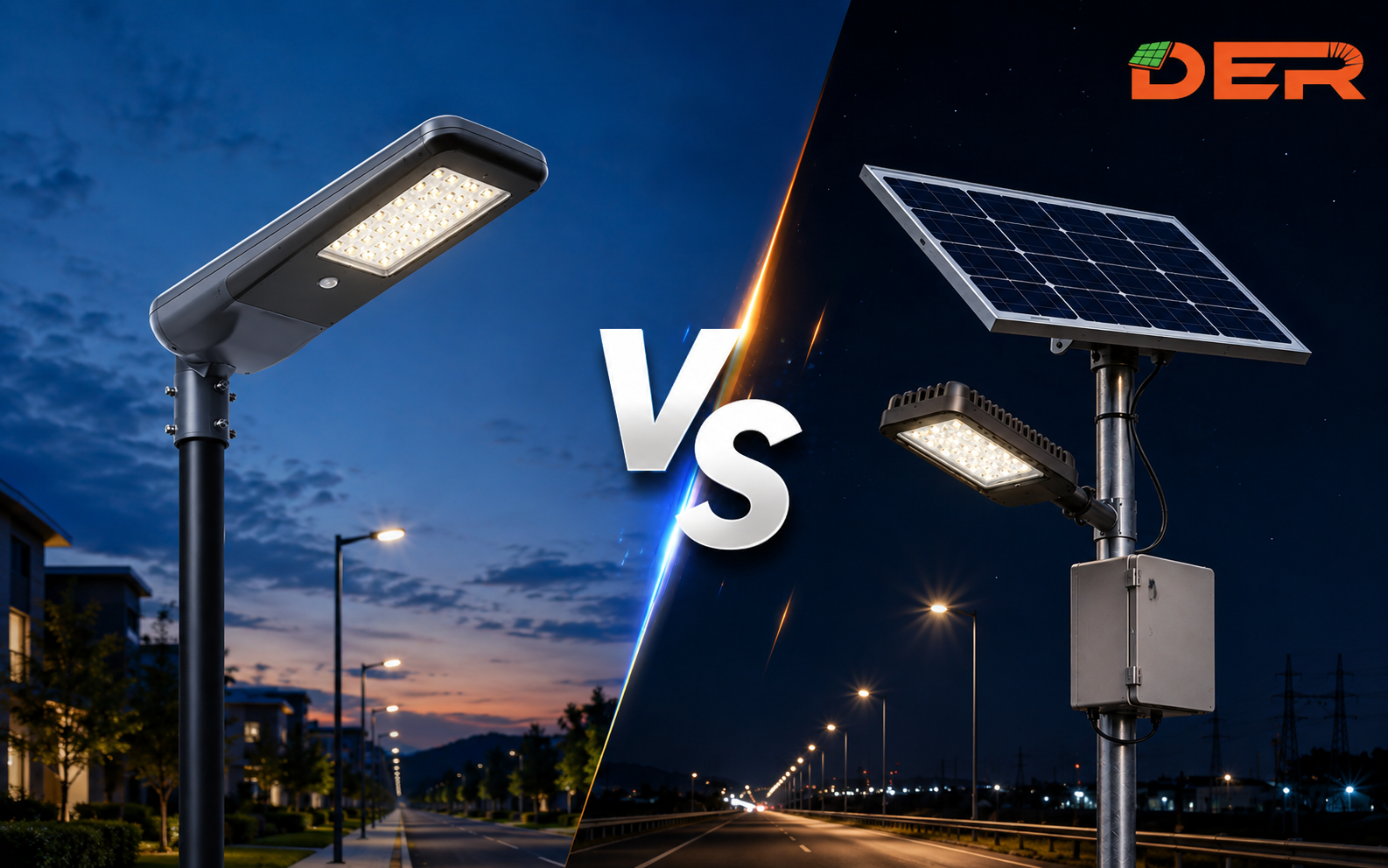
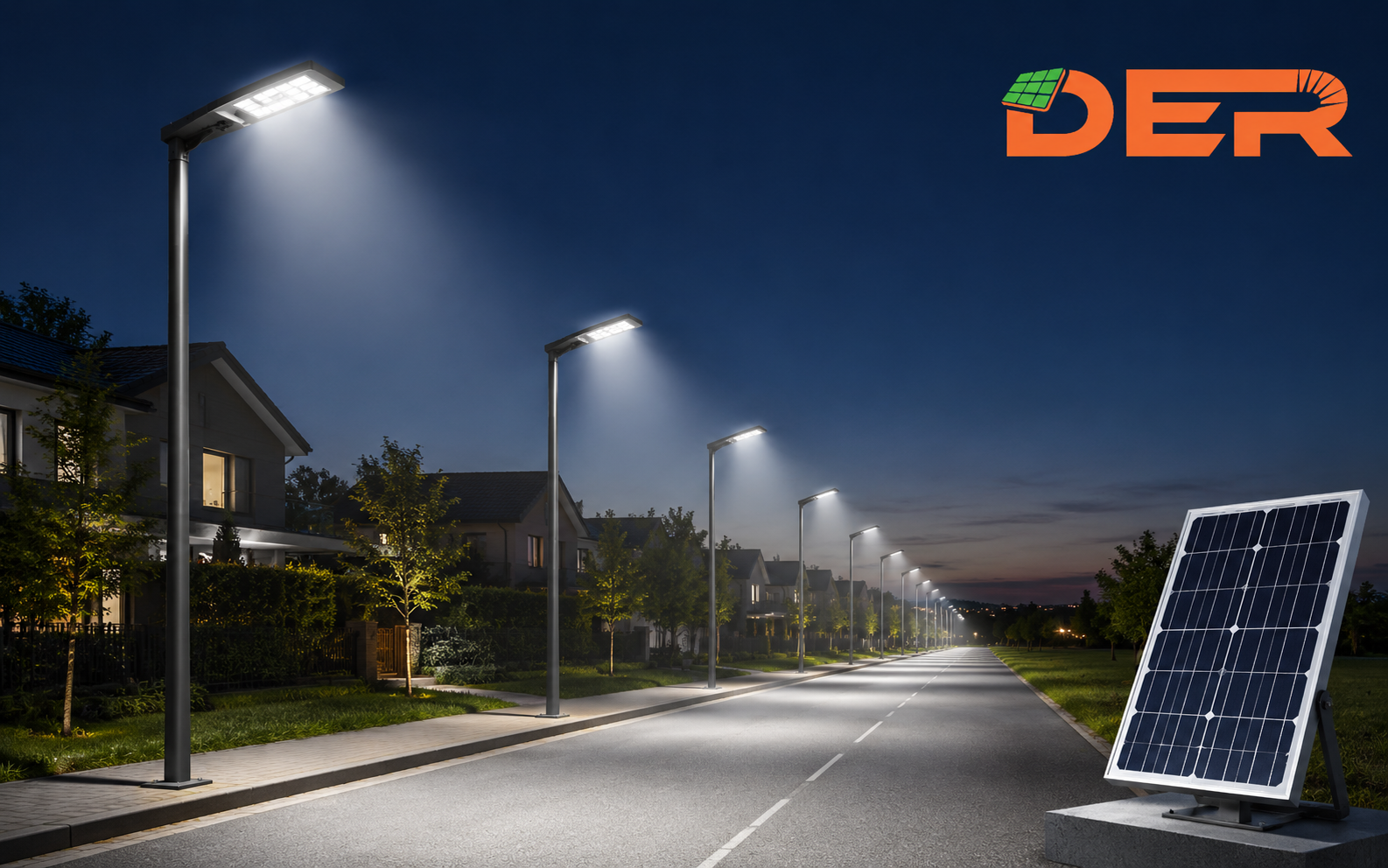
An all-in-one solar street light depends entirely on its solar panel to generate the electricity that powers the entire system. The panel’s efficiency, size, cell quality, and exposure to sunlight determine how much energy the system generates. That energy directly affects battery charging, nighttime runtime, LED brightness, and overall reliability in different weather conditions.
When the solar panel underperforms, every downstream component, including battery charging and nighttime illumination, suffers as a result.
This article explains how solar panels work within an all-in-one solar street light, what factors influence their performance, and what buyers should evaluate when choosing a system built around a high-quality solar panel.
Key Takeaways
- The solar panel is the sole energy source for an all-in-one solar street light, so its performance affects every other component.
- Solar panel efficiency, size, and cell type determine how much energy is available for battery charging.
- Monocrystalline solar panels generally outperform polycrystalline panels in both efficiency and low-light conditions.
- Sunlight availability, panel orientation, dirt accumulation, and temperature all influence real-world energy output.
- Consistent solar panel performance supports faster battery charging, longer runtime, stable brightness, and greater system reliability.
- Buyers should evaluate the complete system, not just LED brightness or battery capacity, when selecting a product.
How Do Solar Panels Affect All in One Solar Street Light Performance?
The solar panel is the energy source for the entire all in one solar street light. Its output determines how much energy is available for battery charging, which in turn controls runtime, brightness, and reliability.
Because every other component depends on the energy the panel collects, weak or inefficient solar panels create performance problems throughout the whole system.
The Solar Panel Is the Primary Energy Source
The solar panel converts sunlight into electricity through the photovoltaic effect. Photovoltaic (PV) cells inside the panel absorb solar energy and convert it into direct current (DC) electricity.
This electricity does not power the LED light directly. Instead, it charges the lithium battery, which then supplies stored energy to the LED during nighttime illumination.
Because of this chain, every other component in an all in one solar street light, including the battery, controller, and LED, depends on the solar panel functioning correctly.
How the Solar Panel Works with Other Components
The solar panel does not operate in isolation. It works together with the lithium battery, the charge controller, and the LED light as one connected energy system.
The charge controller regulates how much electricity flows from the panel to the battery, preventing overcharging and protecting the battery’s lifespan. Many all-in-one integrated solar street light products use an MPPT controller for this task.
How Does a Solar Panel Power an All in One Solar Street Light?
A solar panel powers the system through three sequential stages: daytime energy collection, battery charging, and nighttime lighting. Each stage depends on the one before it, so a weak link at any stage reduces overall system performance.
Daytime Energy Collection
During daylight hours, PV cells absorb solar irradiance and convert it into DC electricity through the photovoltaic effect. This process is called electricity generation, and its output depends on sunlight intensity, panel efficiency, and panel size.
The stronger the solar exposure, the more energy the panel collects during a given day.
Battery Charging
The DC electricity generated by the panel flows into the lithium battery for energy storage. The charge controller regulates this process, preventing overcharging and deep discharge, both of which shorten battery lifespan over time.
Faster and more consistent battery charging speed directly increases the battery reserve available for nighttime use.
Nighttime Lighting
Once the sun sets, the light sensor or intelligent controller detects darkness and switches the system into dusk-to-dawn operation.
The battery discharges stored energy to power the LED light, providing continuous operation until sunrise or until the battery reaches a preset state of charge. This automatic on/off behavior is a standard feature across most all in one solar LED street light products.
What Factors Affect Solar Panel Performance in an All in One Solar Street Light?
Solar panel performance depends on efficiency, size, cell type, sunlight availability, installation angle, surface cleanliness, and temperature. Each factor influences how much energy the panel generates and, ultimately, how well the entire lighting system performs.
Solar Panel Efficiency
Solar panel efficiency, also called energy conversion efficiency, measures how much sunlight a panel converts into usable electricity. Higher solar cell efficiency means the panel generates more power from the same amount of sunlight, which shortens charging time and increases energy output.
Commercial monocrystalline panels used in outdoor lighting commonly reach conversion rates between 20% and 23%, while polycrystalline panels typically range from 15% to 17%.
Solar Panel Size
Larger panels generally collect more solar energy, but panel size in a solar street light pole is limited by the compact, integrated housing design. Manufacturers must balance panel capacity against the physical footprint of the fixture, since oversized panels add weight and cost without always improving real-world energy harvesting.
Solar Cell Type
Monocrystalline solar panels and polycrystalline solar panels are the two most common solar cell types used in outdoor lighting. Monocrystalline solar panels are made from a single silicon crystal structure, which gives them higher efficiency and better performance in low-light conditions.
Polycrystalline solar panels cost less to produce but generally deliver lower energy output per square meter. Because of this efficiency advantage, most all-in-one solar street light manufacturers use monocrystalline panels as the standard choice.
Sunlight Availability
Peak sun hours describe the number of hours per day during which sunlight intensity is strong enough for a solar panel to generate its rated power output. Peak sun hours vary by geographic location, season, and local climate conditions.
A location near the equator typically receives more peak sun hours annually than a location at a higher latitude, which affects how much solar resource is available for charging.
Panel Orientation and Tilt
Solar panel positioning, including installation angle and sun-facing direction, affects how much sunlight the panel receives throughout the day.
A properly calculated tilt angle maximizes solar exposure across the seasons, since the sun’s path changes with latitude and time of year. Incorrect panel orientation reduces energy collection even when the solar cells themselves are high-quality.
Dirt, Dust, Snow, and Debris
Surface contamination, including dust accumulation, dirt, bird droppings, leaves, and snow, blocks sunlight from reaching the PV cells. Even a thin layer of dust can measurably reduce power generation. Preventive maintenance, including regular panel cleaning, helps maintain consistent energy output over the product’s lifespan.
Temperature
Solar panels lose some efficiency as ambient temperature rises above their rated test conditions, since high ambient temperature increases electrical resistance within the solar cells. This means panels installed in hot climates may generate slightly less power on the hottest days compared to their rated capacity, even under strong sunlight intensity.
How Does Solar Panel Performance Affect the Entire Lighting System?
Solar panel performance directly determines battery charging speed, nighttime runtime, brightness consistency, and long-term system reliability. Because the panel is the only energy input, any reduction in its output creates a ripple effect across the rest of the system.
Battery Charging Speed
Higher power generation from the solar panel results in faster battery charging speed and a larger battery reserve by evening. This extra reserve becomes especially important during consecutive cloudy or rainy days, when energy harvesting drops below normal levels.
Nighttime Runtime
Runtime and lighting duration depend on how much energy the battery stored during the day.
A well-matched solar panel and lithium battery combination provides lighting autonomy, meaning the light can continue operating for several cloudy days without full recharging, depending on battery capacity and power consumption settings.
Brightness Consistency
Brightness consistency depends on whether the battery holds enough charge to power the LED at full lumen output throughout the night.
Insufficient charging, caused by poor solar panel performance, often triggers dimming control or adaptive lighting features that reduce brightness to conserve remaining battery capacity.
Reliability in Different Weather Conditions
System reliability during cloudy weather, rainy days, and winter depends heavily on solar panel efficiency and battery capacity working together. A high-efficiency solar panel captures more available energy even under overcast skies, which helps maintain consistent illumination through seasonal variation.
Overall System Lifespan
Consistent, well-regulated battery charging supports a longer battery lifespan by avoiding repeated deep discharge and overcharging. Charge cycles managed properly by an MPPT controller reduce battery stress over time, extending the long-term reliability of the entire all-in-one solar street light.
What Common Solar Panel Problems Reduce Performance?
The most common causes of reduced solar panel performance are dust accumulation, shading, incorrect installation angle, panel aging, and low-quality components. Each of these problems reduces energy output even when other parts of the system function normally.
- Dust and Dirt Accumulation: Surface contamination blocks sunlight and lowers power generation over time.
- Shading from Trees or Buildings: Partial shading on even a small section of a solar panel can disproportionately reduce total energy output.
- Incorrect Installation Angle: A poorly set tilt angle reduces solar exposure across the day and across seasons.
- Aging or Damaged Solar Panels: Microcracks, delamination, and general wear reduce the conversion rate as panels age.
- Low-Quality Solar Panels: Panels made with substandard solar cells often show inconsistent energy output and faster performance degradation.
How Do You Choose an All-in-One Solar Street Light with a High-Quality Solar Panel?
Buyers should evaluate solar cell type, conversion efficiency, panel capacity, local sunlight conditions, and overall system design rather than judging a product by LED brightness alone.
A well-engineered all-in-one integrated solar street light balances all four core components for consistent long-term performance.
Choose Monocrystalline Solar Panels
Monocrystalline solar panels generally offer higher solar cell efficiency and better low-light performance than polycrystalline alternatives, making them the preferred choice for most all-in-one solar LED street light products.
Check Solar Panel Conversion Efficiency
Ask manufacturers for the specific conversion efficiency rating rather than accepting vague claims of “high efficiency.” A documented efficiency percentage allows for accurate comparison between products.
Match Solar Panel Capacity to Lighting Requirements
Panel capacity should align with the lighting requirements of the project, including desired lumen output, lighting coverage, and hours of continuous operation needed each night.
Consider Local Sunlight Conditions
For importers and distributors, panel capacity should be evaluated alongside local peak sun hours and geographic location to ensure the product matches actual project conditions rather than laboratory test conditions.
Evaluate the Complete System Design
A solar panel cannot compensate for poor component matching elsewhere in the system. Buyers should assess how the solar panel, lithium battery, LED, and charge controller work together as a balanced unit.
| Component | Role in System |
| Solar panel | Converts sunlight into DC electricity |
| Lithium battery | Stores energy for nighttime use |
| Charge controller | Regulates charging and prevents overcharging |
| LED light | Converts stored energy into illumination |
Proper system balancing matters because an oversized battery paired with an undersized solar panel will rarely reach a full state of charge, while an oversized panel paired with a small battery wastes potential energy output.
Where Does Solar Panel Performance Matter Most?
Solar panel performance matters most in applications where consistent nighttime illumination is critical and grid power is unavailable or costly to extend. Different applications carry different energy demand profiles, which affect the ideal panel capacity and battery pairing.
Common applications include:
- Residential streets, where moderate brightness and standard runtime are typically sufficient
- Rural roads, where off-grid lighting makes solar panel reliability especially important
- Parking lots, which often require wider lighting coverage and higher lumen output
- Commercial areas, where consistent brightness supports safety and visibility
- Industrial sites, where extended operating hours and rugged outdoor durability are priorities
Buyers evaluating options for these applications, including the DER series of all-in-one solar street lights, should match panel capacity and battery sizing to the specific lighting requirements and local sunshine hours of each project.
Choose an All-in-One Solar Street Light with the Right Solar Panel
A high-quality solar panel is the foundation of a reliable all-in-one solar street light, but it delivers the best results only when it is properly matched with the lithium battery, charge controller, and LED.
At DER Lighting, we engineer every system as a balanced solution to provide dependable brightness, long runtime, and consistent performance across different project environments.
Explore our all-in-one solar street light series or contact our team to find the right solution for your application.
Conclusion
Solar panel performance sits at the center of how well an all in one solar street light functions. Panel efficiency, size, and sunlight exposure determine battery charging, runtime, brightness, and long-term reliability.
Buyers should evaluate the entire system, including the solar panel, battery, controller, and LED, rather than focusing on a single specification. Choosing a properly engineered, well-matched product ensures reliable long-term performance.
Frequently Asked Questions (FAQs)
Insufficient sunlight reduces the energy available for battery charging, which can shorten nighttime runtime or trigger dimming to conserve remaining battery capacity.
Yes. The battery stores surplus energy collected during sunny periods, allowing the light to continue operating through several consecutive cloudy or rainy days, depending on battery capacity and lighting settings.
Most manufacturers recommend cleaning the solar panel every one to three months, though dusty or high-pollen environments may require more frequent cleaning to maintain consistent energy output.
Yes. Monocrystalline solar panels typically offer higher conversion efficiency and perform better in low-light conditions compared to polycrystalline panels.
Not necessarily. Panel size must be matched to battery capacity and lighting requirements. An oversized panel paired with a small battery does not improve runtime and can add unnecessary cost.
Quality solar panels typically last 20 to 25 years, though gradual efficiency loss and physical wear can reduce output slightly over that period.
Yes. Partial shading on even a small section of the panel can significantly reduce total energy output, which lowers battery charging and can shorten nighttime runtime.
Buyers should look for documented conversion efficiency, monocrystalline cell construction, panel capacity matched to lighting requirements, and outdoor durability suited to local climate conditions.