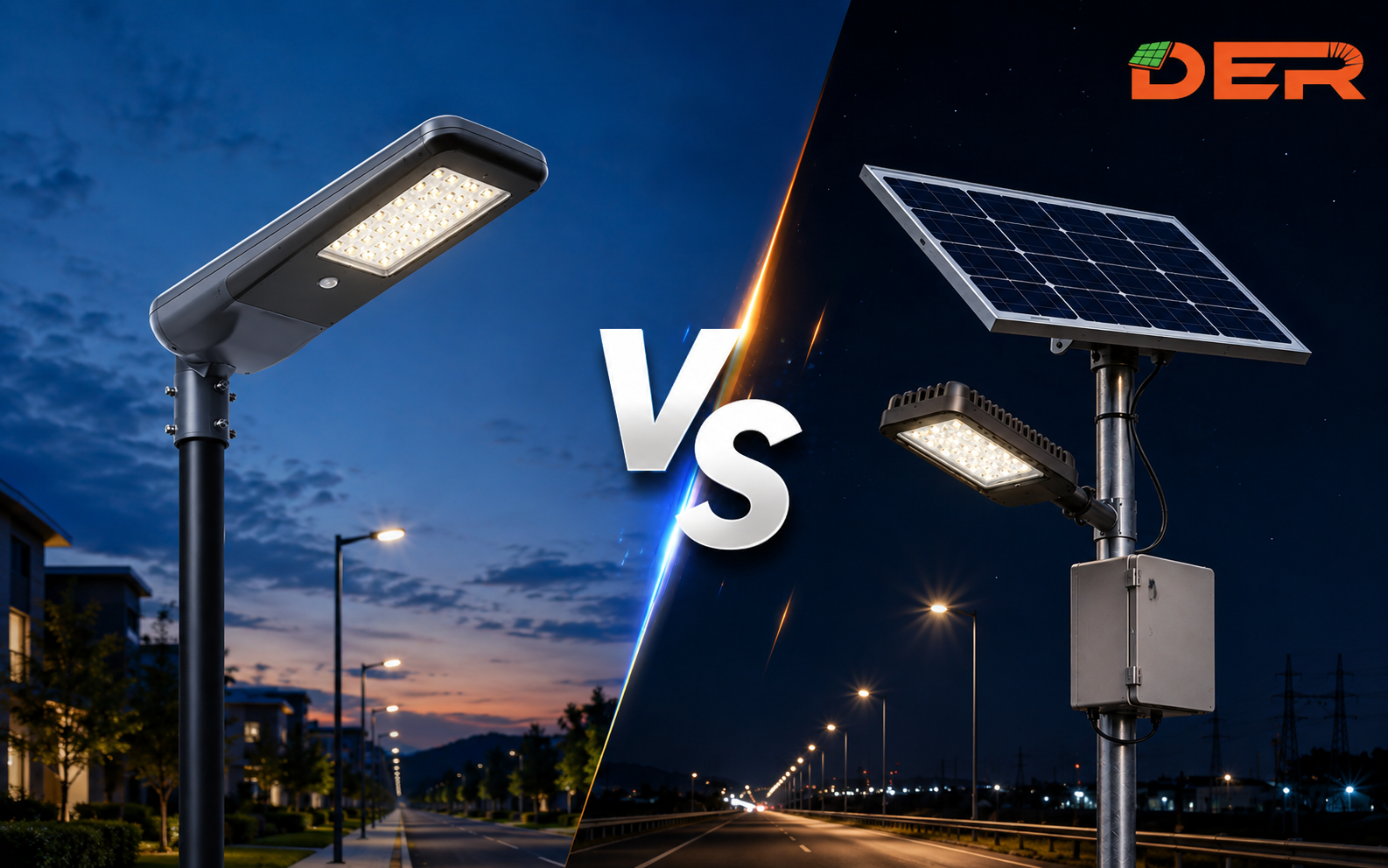
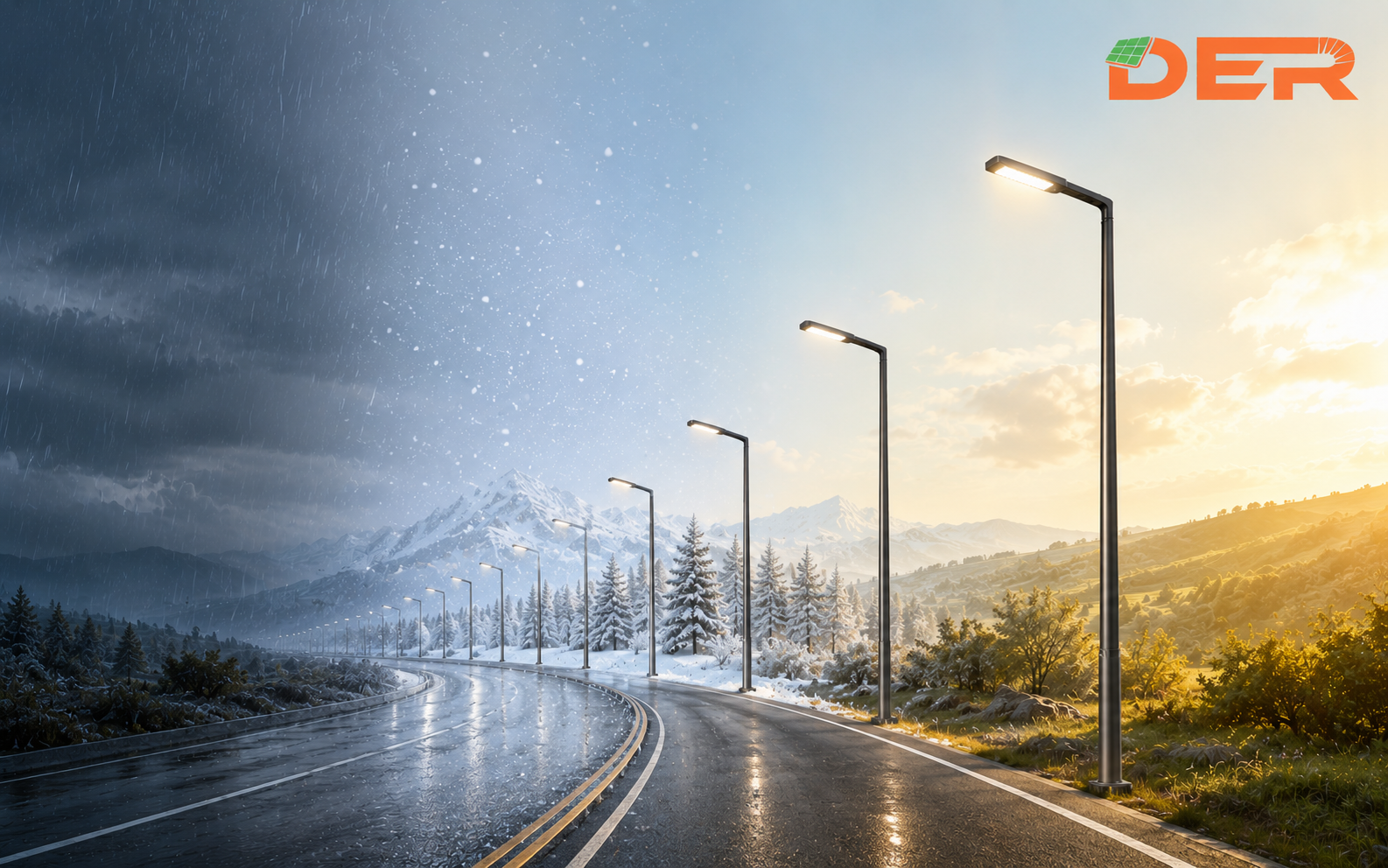
Yes, weather affects every all in one solar street light. Temperature, cloud cover, rain, snow, wind, and dust each influence charging efficiency, battery performance, LED runtime, and component lifespan in different ways.
Modern all in one integrated solar street light systems are engineered to keep working across a wide range of climates when they are properly selected and sized.
Understanding these effects helps buyers and distributors choose the right all in one solar street light for their specific project location.
Key Takeaways
- Weather affects charging efficiency, battery performance, and long-term durability in every all in one solar street light.
- Clouds and rain reduce charging speed rather than stopping operation entirely.
- Heat lowers solar panel efficiency and accelerates battery aging, even though it does not stop charging.
- Cold temperatures reduce usable battery capacity but can improve panel efficiency.
- Battery autonomy, proper system sizing, and smart controllers are critical for reliable year-round performance.
- Buyers should match an all in one integrated solar street light’s specifications to local climate rather than relying on a generic, one-size-fits-all solution.
How Does Weather Affect an All in One Solar Street Light?
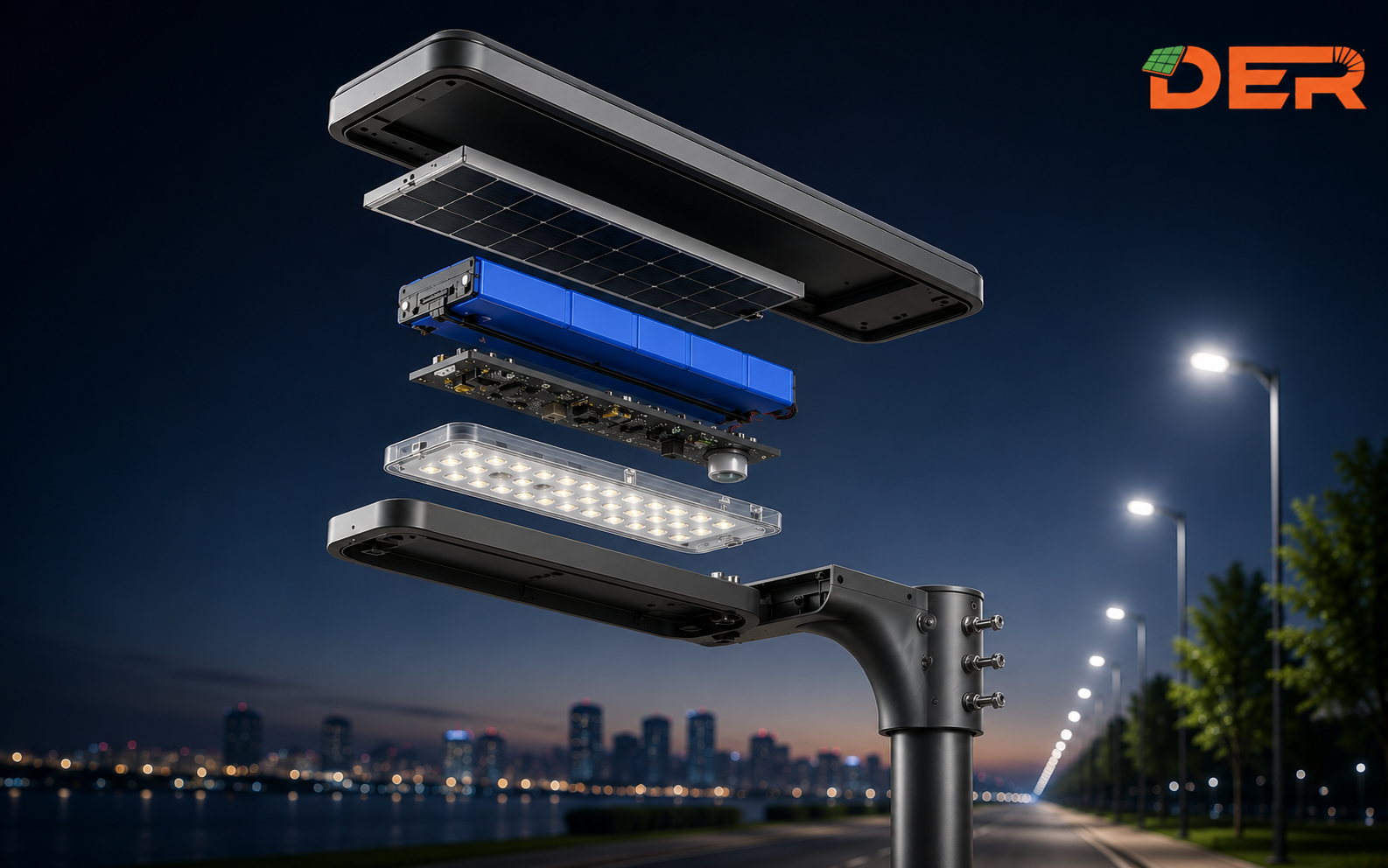
If you’re unfamiliar with how an all-in-one solar street light works, it’s helpful to know that it combines the solar panel, lithium battery, LED module, and charge controller into a single integrated unit, so weather conditions reach every part of the system at once. Heat, cold, rain, and dust each act on a different stage of the energy cycle.
Together they influence solar charging, battery storage, LED operating time, controller behavior, and long-term durability.
Which Components Are Most Affected by Weather?
Five components respond most directly to weather changes:
- Solar panel – captures sunlight and converts it into electricity; performance shifts with temperature, cloud cover, and dust buildup.
- Lithium battery – stores energy for nighttime use; capacity and charging speed both change with ambient temperature.
- LED module – converts stored energy into light; efficiency is fairly stable but heat can shorten lifespan over time.
- Charge controller – manages how energy moves between the panel and battery, protecting against overcharging and deep discharge.
- Housing and seals – protect internal electronics from rain, humidity, dust, and structural stress from wind.
Which Weather Conditions Have the Greatest Impact on Performance?
| Weather | Main Effect | Primary Component Affected | Typical Impact |
| Heat | Reduced panel efficiency | Solar panel | Lower charging efficiency |
| Clouds | Less solar energy | Panel & battery | Shorter charging |
| Rain | Reduced sunlight | Charging system | Lower daily energy |
| Snow | Panel blockage | Panel | Charging interruption |
| Cold | Battery efficiency | Lithium battery | Reduced usable capacity |
| Wind | Structural stress | Housing & pole | Physical damage |
| Dust | Blocks sunlight | Solar panel | Reduced charging |
How Do Hot Weather and High Temperatures Affect Performance?
High temperatures reduce photovoltaic conversion efficiency and can accelerate battery aging, even though the panel is receiving more sunlight overall. This means hotter climates do not automatically produce more usable energy.
Why Solar Panels Become Less Efficient in High Temperatures
Every solar panel has a temperature coefficient, which describes how much output drops for each degree above a set reference temperature. As panel temperature rises above roughly 25°C, photovoltaic conversion efficiency gradually declines.
This is why a monocrystalline silicon panel in a hot desert climate can generate less power on a very hot day than the same panel on a mild, sunny day.
How Heat Affects Lithium Batteries
Heat affects a lithium battery differently depending on the stage of use. During charging, moderate heat is generally tolerated well by lithium iron phosphate (LiFePO₄) chemistry.
During storage, however, sustained high temperatures speed up battery degradation and shorten overall service life. Over years of operation, this thermal stress is one of the main causes of reduced usable capacity in hot climates.
How Quality All in One Solar Street Lights Handle High Temperatures
Well-engineered fixtures manage heat through several design features:
- Aluminum heat sinks that draw heat away from the LED driver and battery compartment
- Thermal management systems that regulate internal temperature
- UV-resistant housing that limits material degradation from constant sun exposure
- Proper ventilation that prevents heat from building up inside the compact housing
For importers and distributors, projects in desert or tropical climates should prioritize an all in one led solar street light rated for high ambient temperature and equipped with active thermal dissipation.
Can All in One Solar Street Lights Work During Cloudy Weather?
Yes, an all in one solar street light can continue operating during cloudy weather because the panel still generates electricity from diffuse sunlight rather than direct sunlight alone.
Cloud cover reduces available solar irradiance, which lowers daily energy generation, but it does not stop charging completely.
Why Charging Slows Down on Cloudy Days
Cloud cover scatters and blocks a portion of incoming sunlight before it reaches the panel. Since photovoltaic conversion depends on solar irradiance, less usable light naturally means a slower charging rate.
On heavily overcast days, charging efficiency can drop significantly compared to clear skies, even though some energy is still being collected.
What Is Battery Autonomy?
Battery autonomy is the number of nights a solar street light can continue operating without sufficient solar charging.
This figure is calculated based on battery capacity, nightly energy consumption, and lighting settings. A light rated for three days of autonomy, for example, can typically run through three consecutive cloudy days before output needs to be reduced.
Why Battery Capacity Matters More Than One Cloudy Day
A single cloudy day rarely causes a noticeable problem because most systems are sized with reserve capacity built in. The real test comes from consecutive cloudy days, when the battery has less opportunity to recharge between uses. This is why battery capacity should be evaluated alongside local sunshine hours rather than average daily conditions alone.
How Smart Controllers Extend Runtime
Smart charge controllers help stretch available energy through several strategies:
- Adaptive dimming – lowers brightness during low-priority hours to conserve battery reserves
- Intelligent discharge – manages how quickly stored energy is released overnight
- Energy prioritization – shifts available power toward core lighting functions when reserves run low
How Does Rain Affect All in One Solar Street Lights?
Rain itself usually causes little harm to a properly sealed all in one solar street light. The bigger issue is the reduced sunlight that typically accompanies rainy weather, which lowers daily energy generation similar to cloudy conditions.
Does Rain Damage Solar Street Lights?
Rain does not damage a solar street light when the housing has adequate ingress protection. Ratings such as IP65, IP66, and IP67 indicate how well a fixture resists dust and water.
What Does an IP Rating Mean?
An IP rating, or ingress protection rating, describes how well an enclosure resists solid particles and water. IP66 means the fixture is dust-tight and protected against powerful water jets, while IP67 adds protection against temporary submersion.
Humidity and Corrosion Protection
Humidity and moisture create a longer-term risk than rain itself, particularly in coastal or tropical environments. Sealed housing keeps moisture away from internal electronics and connectors.
Corrosion-resistant aluminum housing and properly sealed connectors further protect against condensation and water ingress over years of outdoor use.
How Do Snow and Freezing Temperatures Affect Performance?
Winter conditions reduce performance mainly by blocking sunlight and temporarily lowering battery capacity, not by permanently damaging components.
Snow Blocking Solar Panels
Snow accumulation on the panel surface physically blocks sunlight from reaching the photovoltaic cells, which can interrupt charging until the snow melts or slides off.
Panel tilt angle plays a meaningful role here, since a steeper installation angle helps snow shed naturally instead of building up.
How Cold Weather Affects Lithium Batteries
Cold weather temporarily decreases usable battery capacity rather than causing permanent damage. A lithium battery in freezing conditions has slower internal chemical activity, which reduces how much stored energy it can release at once. Capacity typically recovers once temperatures rise again.
Why Cold Weather Can Improve Solar Panel Efficiency
Cold temperatures can actually improve photovoltaic conversion efficiency, even though daylight hours are shorter in winter. Solar cells generally perform better electrically at lower panel temperatures, meaning a cold, clear day can produce a more efficient charging rate per hour of sunlight than a hot summer day.
This benefit is limited by shorter daylight hours and potential snow cover, but it is a detail often left unexplained.
Design Features for Cold Climates
- Optimized panel tilt for better sun exposure and snow shedding
- Battery management systems tuned for low-temperature performance
- Insulation around the battery compartment to buffer against temperature swings
How Do Strong Winds and Storms Affect All in One Solar Street Lights?
Wind and storms primarily create structural risk rather than electrical performance issues. Wind load affects poles, brackets, and mounting hardware more than it affects the solar panel or battery itself.
Structural Challenges
Sustained wind and storm activity places stress on three main areas: the street light pole, mounting brackets, and the fixture housing. Poor foundation depth or undersized brackets are common failure points during high-wind events.
Why Wind Ratings Matter
Wind load rating describes the maximum wind pressure a pole and fixture assembly can withstand without structural failure. Choosing a wind load rating appropriate to the installation region, especially in areas prone to storms, hurricanes, or typhoons, protects against costly pole failure or fixture damage.
Lightning and Surge Protection
Surge protectors and proper grounding protect the internal electronics from voltage spikes caused by nearby lightning strikes. This is an area many competitor articles overlook, yet it is an important part of electrical safety for any outdoor lighting installation in storm-prone regions.
How Do Dust, Sand, and Air Pollution Affect Solar Street Lights?
Dust, sand, and air pollution reduce solar generation by physically blocking sunlight from reaching the panel surface. This effect is most pronounced in desert climates, on dusty rural roads, and near industrial areas with high particulate air pollution.
Why Regular Cleaning Improves Performance
A layer of dust or sand on the panel surface can meaningfully lower charging efficiency, sometimes by a significant margin depending on accumulation. Establishing a routine panel cleaning and maintenance schedule helps maintain consistent daily energy generation in dusty environments.
How Anti-Soiling Glass Helps
Anti-soiling coating and hydrophobic coating on the panel glass reduce how much dust and debris stick to the surface. These self-cleaning coating technologies lower the frequency of manual cleaning needed, which is especially valuable for large-scale installations across dusty regions.
Which Technologies Help All in One Solar Street Lights Perform Better in Different Weather?
Several technologies work together to help an all in one solar led street light adapt to changing weather conditions throughout the year.
MPPT Charge Controllers
Maximum Power Point Tracking (MPPT) is a charging technology that continuously adjusts the electrical operating point of a solar panel to harvest the maximum available energy under changing sunlight conditions, including cloudy or low-light weather.
Lithium Battery Management Systems (BMS)
A Battery Management System (BMS) monitors and protects the lithium battery, regulating charge cycles, preventing overcharging or deep discharge, and adjusting behavior based on temperature.
Adaptive Dimming
Adaptive lighting reduces brightness during off-peak hours, extending battery autonomy during periods of reduced solar charging.
Motion Sensors
Motion sensors reduce energy consumption by lowering brightness when no activity is detected, then increasing it automatically. This directly extends runtime during poor weather stretches.
Smart Lighting Profiles
Smart lighting profiles allow a lighting profile to be programmed around expected seasonal conditions, balancing brightness, runtime, and energy management automatically.
How Should Buyers Choose an All in One Solar Street Light for Their Local Climate?
Choosing the right all in one solar street light manufacturer and product specifications starts with matching system components to local climate conditions rather than relying on a one-size-fits-all solution.
Buyers who need product customization or private labeling should also evaluate a supplier’s OEM & ODM services before making a purchasing decision.
For Hot Regions
Prioritize models with aluminum heat sinks, active thermal management, and a battery chemistry rated for high-temperature performance.
For Cloudy Regions
Prioritize larger battery capacity and higher battery autonomy to cover several consecutive cloudy days.
For Snowy Regions
Prioritize adjustable panel tilt angle, snow-shedding design, and battery management suited for low-temperature performance.
For Coastal Areas
Prioritize a higher IP rating along with corrosion-resistant aluminum housing and sealed connectors to resist humidity and salt exposure.
For Dusty Environments
Prioritize anti-soiling coating and establish a realistic panel cleaning schedule from the start.
| Climate | What to Prioritize |
| Desert | Heat resistance |
| Tropical | IP rating |
| Coastal | Corrosion resistance |
| Cold | Battery chemistry |
| Cloudy | Larger battery capacity |
| Dusty | Cleaning schedule |
Common Misconceptions About Weather and Solar Street Lights
- “Solar lights stop working when it’s cloudy.” They keep charging from diffuse sunlight, just at a slower rate.
- “Rain damages solar panels.” Properly IP-rated housing prevents water ingress; rain itself is not the main risk.
- “Cold weather ruins solar panels.” Cold temporarily reduces battery capacity, but it does not damage the panel and can even improve panel efficiency.
- “Heat always improves solar output.” Heat increases sunlight availability but lowers photovoltaic conversion efficiency at the same time.
- “More sunlight always means better performance.” Panel temperature, dust, and battery condition all affect real-world output just as much as raw sunlight hours.
Looking for an All in One Solar Street Light Built for Your Climate?
DER Lighting designs and manufactures all in one solar street lights engineered for real-world weather conditions, from desert heat to coastal humidity to freezing winters.
As an experienced all in one solar street light manufacturer, DER supports importers and distributors with proper system sizing, climate-matched specifications, and reliable component quality. Contact our team today to find the right all in one integrated solar street light for your next project.
Conclusion
Weather shapes how every all in one solar street light performs, from charging efficiency to battery capacity to structural durability. Heat, cold, rain, wind, and dust each affect different components in distinct ways. Choosing a system matched to local climate, with proper battery autonomy and smart controls, ensures reliable, consistent lighting performance across every season.
Frequently Asked Questions (FAQs)
Yes. Battery autonomy determines how many consecutive cloudy days a light can operate on stored energy before output needs to be reduced.
No, not when the housing carries an appropriate IP rating such as IP65, IP66, or IP67 that prevents water ingress.
Yes, though snow accumulation on the panel can temporarily block charging until it melts or slides off a properly tilted panel.
Yes. Higher panel temperatures lower photovoltaic conversion efficiency, even though more sunlight is typically available.
Lithium iron phosphate (LiFePO₄) batteries are commonly used in all in one solar street lights because they tolerate a wide operating temperature range with a proper battery management system in place.
This depends on battery capacity and lighting settings, but many systems are designed with two to five days of battery autonomy as a baseline.
IP65 or higher is generally recommended, with IP66 or IP67 preferred for regions with heavy rain or humidity.
Cleaning frequency depends on local dust levels, but many dusty or desert installations benefit from a monthly to quarterly panel cleaning schedule.